
Alaska Faces Data Gap as NSF Decommissions Ocean Observatories Initiative
The National Science Foundation (NSF) announced plans in May to decommission the Ocean Observatories Initiative (OOI), a nearly $368 million deep-ocean monitoring network. This decision is causing anxiety in Alaska, the nation's leading fish-producing state, which is experiencing warming temperatures at twice the global average. The OOI provides real-time data on ocean chemistry, temperature, and wave action, which is vital for scientists, fishery managers, coastal planners, and the military.
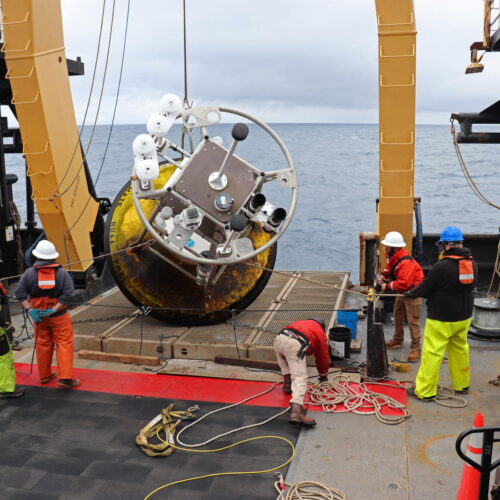
The upcoming decommissioning of a deep-ocean monitoring system is causing significant concern in Alaska. The National Science Foundation (NSF) announced its plans in May to cease operations for the Ocean Observatories Initiative (OOI), a network valued at nearly $368 million.
Alaska, recognized as the nation’s top fish-producing state, is particularly vulnerable to environmental changes. The state is currently experiencing warming temperatures at a rate twice the global average, intensifying the anxiety surrounding the loss of critical ocean data.
The OOI is comprised of scientific instruments designed to track various ocean metrics, including ocean chemistry, wave action, water temperature, and salinity. This network provides real-time information crucial for a wide range of stakeholders.
The data collected by these ocean observatories is utilized by scientists, fishery managers, coastal hazard planners, and even the military. It aids in calculating sustainable fish harvests, predicting marine heatwaves, and anticipating giant wave events, among other essential planning and preparedness activities.
According to Ars Technica, the loss of this system could leave Alaskans without essential real-time ocean information.
Advertisement
AdSense slot • inline


