
Chinese Rocket Stage Breaks Apart Near Starlink Constellation, ISS Orbit
The upper stage of a commercial Chinese Zhuque-2E rocket, launched last week, has broken apart in low-Earth orbit. This incident occurred in a heavily trafficked region of space that hosts the International Space Station and a significant portion of SpaceX's Starlink broadband network. The breakup, which likely generated 100 to 150 new pieces of space debris, was confirmed by the US Space Force, which stated that ongoing analysis is being conducted for spaceflight safety.
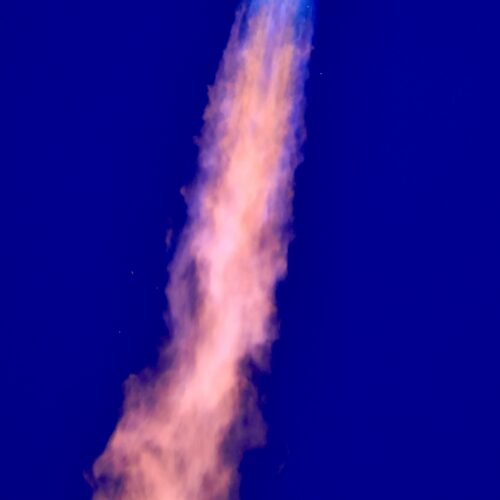
The upper stage of a commercial Chinese rocket, the Zhuque-2E, launched last week on June 9, has fragmented in space. The breakup occurred in a heavily used section of low-Earth orbit, an area critical for the International Space Station (ISS) and a substantial part of SpaceX's Starlink broadband network.
The rocket had successfully reached orbit, carrying two satellites designed for direct-to-cell communications. The disintegration of the upper stage may have happened around the time it was scheduled to perform a disposal burn.
The US Space Force confirmed the breakup event via a post on space-track.org, a platform used by the military to share orbit data with the public. They indicated that the tracked debris is being incorporated into routine conjunction assessments to support overall spaceflight safety.
While analysis is ongoing, the Space Force currently states that there are no immediate threats to human spaceflight. The breakup is estimated to have created between 100 and 150 new pieces of space junk.
According to Ars Technica, the event underscores ongoing concerns regarding space debris and orbital safety.


