FedEx Freight Spins Off from Parent Company, Targets Independent Growth
FedEx Freight, a less-than-truckload (LTL) network generating approximately $9 billion in annual revenue, has officially spun off from its parent company, FedEx. CEO John Smith indicated the separation aims to grant the independent entity greater control over capital allocation, technology investments, and sales strategies. The move is intended to enable FedEx Freight to modernize its operations and pursue specialized growth opportunities, including expanding its presence in healthcare and re-engaging small to midsize businesses.
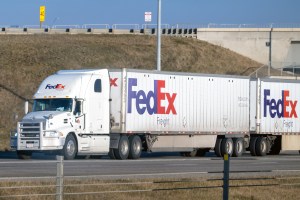
FedEx Freight, an entity generating approximately $9 billion in annual revenue and operating one of North America's largest less-than-truckload (LTL) networks, has officially spun off from its parent company, FedEx. John Smith, CEO of FedEx Freight, stated that the separation was necessary as the company reached a point requiring a distinct operating model.
Prior to the spin-off, FedEx Freight operated within a larger organization approaching $90 billion in annual revenue. This significant difference in scale influenced capital allocation and technology investments, with resources often directed towards FedEx's larger parcel business. Smith highlighted that control over these key areas, along with sales organization and growth strategies, was a primary driver for independence.
For years, FedEx Freight's technology, finance, sales, and back-office functions were integrated with the broader FedEx structure. However, as the freight market evolved, many of these systems became increasingly optimized for parcel delivery, rather than specifically addressing the needs of the LTL market.
The separation marks a new beginning for FedEx Freight, according to Smith. The company plans to modernize its technology, establish a dedicated sales force, and leverage artificial intelligence (AI) and machine learning to enhance network performance. Key growth opportunities include expanding into the healthcare sector and re-engaging small and midsize business customers, a segment where the company historically underperformed due to accessibility issues.
Independence is expected to provide the freedom to pursue these priorities without direct competition for resources with the larger parcel operation. One example involves utilizing operational data, including dimensional data on freight shipments, with AI and machine learning to make smarter decisions regarding capacity utilization, routing, and pricing. The company also aims to build upon existing relationships in healthcare while expanding into specialized freight categories such as medical equipment.
According to Fortune, the spin-off offers a case study in how a large, profitable, and strategically important business might still require a different operating model to achieve its next phase of growth.