
Ferveret Develops Nuclear-Inspired Cooling System for Sustainable Data Centers
Ferveret, a startup founded by two MIT researchers, has developed an innovative cooling system aimed at increasing the sustainability of data centers. The technology, inspired by nuclear reactor heat transfer, submerges computer servers in a specialized liquid, utilizing Adaptive Phase Cooling (APC) to create smaller, more frequent bubbles for enhanced heat dissipation. This system significantly reduces the energy and water consumption typically required to cool the powerful chips driving artificial intelligence. Currently, the solution is being tested with major data center operators and AI companies, showing promise in improving computational power efficiency and optimizing AI model performance.
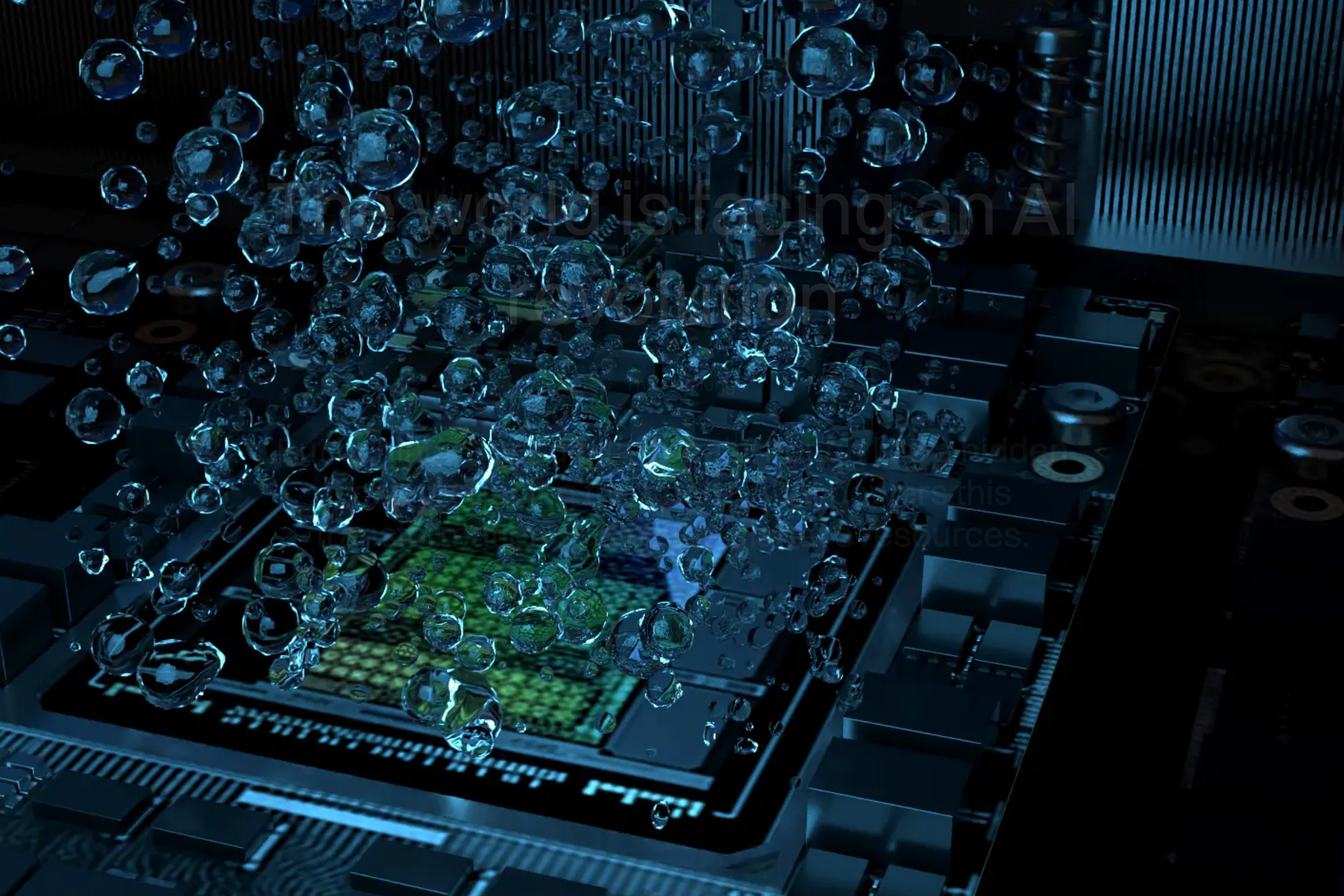
Data centers, crucial for the expansion of artificial intelligence, are projected to consume a substantial portion of total U.S. electricity usage by the end of the decade. A significant amount of this electricity, approximately one-third, is dedicated to cooling the chips that power AI models.
Ferveret, a startup co-founded by Reza Azizian, a former MIT postdoc in nuclear engineering, and Matteo Bucci, an MIT associate professor in Nuclear Science and Engineering, aims to enhance the efficiency of this cooling process. The company's technology adapts principles from nuclear reactors to cool chips using no water and reduced electricity.
The system involves submerging computer servers in a specialized liquid designed to absorb heat more efficiently than traditional air cooling. Ferveret's Adaptive Phase Cooling (APC) solution distinguishes itself by producing smaller, more frequently detaching bubbles at the server surface, which accelerates the heat transfer process.
Initial studies in collaboration with the University of California at Los Angeles indicate that Ferveret's APC solution led to a 15 percent improvement in computational power efficiency compared to existing liquid cooling methods. When combined with Ferveret's power control system, the company states data centers can achieve a 35 percent increase in AI model outputs (tokens) using the same amount of power.
Ferveret is currently testing its solutions with several companies, including data center developer CleanSpark, AI accelerator company FuriosaAI, and data center operator Switch.
Azizian and Bucci began developing the concept in 2021, drawing on their prior work on heat transfer optimization in nuclear reactors. This expertise, focused on maximizing energy extraction from reactor cores, was adapted to address the increasing cooling demands of high-density computing in data centers.
According to MIT News AI, the company's objective is to make data centers as sustainable as possible, ensuring efficient power usage and zero water consumption.
Advertisement
AdSense slot • inline


