
NASA's Deep Space Network Successfully Supports Artemis II Mission
NASA's Deep Space Network (DSN) effectively managed communication demands for the Artemis II mission, connecting Mission Control with the Orion capsule as it flew a quarter-million miles from Earth. This performance contrasts with the Artemis I mission, nearly four years prior, when the DSN struggled to keep up with the combined demands of 40 robotic science missions and the Orion spacecraft. Despite higher data requirements for the crewed Artemis II, the mission's shorter duration and fewer CubeSats helped prevent communication overload.
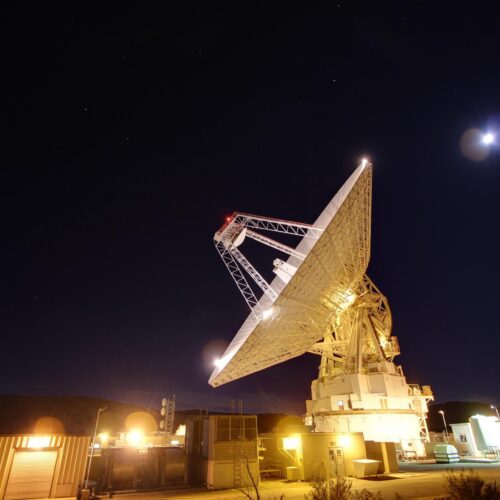
NASA's Deep Space Network (DSN) successfully provided communications support for the Artemis II mission, connecting Mission Control to the Orion capsule as it traveled more than a quarter-million miles from Earth. This performance followed an earlier period when the global array of deep space communications antennas was pushed beyond its limits.
During the Artemis I mission nearly four years ago, the DSN encountered difficulties managing the routine demands of 40 robotic science missions alongside the substantial requirements of NASA's Orion space capsule orbiting the Moon. This strain in late 2022 resulted in reduced or delayed data downlinks from several high-profile science missions, including the James Webb Space Telescope and Mars rovers, as the data-intensive Artemis I mission took priority.
With a crew of four onboard the spacecraft, the agency anticipated an even greater demand for data from Orion during Artemis II compared to Artemis I. However, the Artemis II mission had a shorter duration of just over nine days, in contrast to Artemis I's 25 days in space. Additionally, Artemis II carried fewer small CubeSats, which had required tracking and telecom services from the DSN during Artemis I, helping to alleviate potential communication overload.
According to Ars Technica, the Deep Space Network "worked well" on Artemis II after its previous challenges.
Advertisement
AdSense slot • inline


