New York Explores Mandating 3D Printer Gun-Blocking Technology
New York has enacted a law, with California considering similar legislation, that could require 3D printers sold to consumers and businesses to include technology blocking the manufacturing of firearms. This initiative aims to combat the proliferation of untraceable "ghost guns" that lack serial numbers and evade traditional background checks. The proposed technology would utilize expert-developed algorithms to detect and reject digital designs resembling firearm components. While some experts affirm the feasibility of such geometric analysis, the mandate for this blocking technology would not take effect until 2029, or later in New York, pending feasibility assessments by study groups. The effort is unique in its focus on the manufacturing equipment rather than the individuals involved.
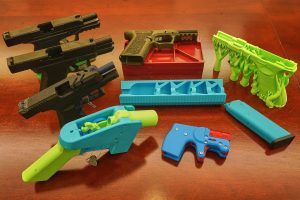
A new law in New York and a proposed bill in California seek to mandate that 3D printers sold for home and business use be equipped with technology designed to prevent the production of firearms. This legislative push targets the rise of untraceable “ghost guns,” which are privately made, lack serial numbers, and bypass background checks typically required for gun purchases.
Approximately one-third of U.S. states have already implemented measures to ban or regulate build-it-yourself firearms. The New York and California initiatives are distinct as they focus on the equipment used to produce these firearms, rather than regulating the individuals who make them.
The global 3D printing industry has experienced significant growth, with the number of printers increasing from an estimated 30,000 in 2012 to over 3 million. The industry's value has also expanded from around $2 billion to $26 billion annually, according to Bill Decker, executive chairman of the Association of 3D Printing. While 3D printers can produce various items such as toys, prosthetic limbs, and airplane parts, they can also be used to create firearms or their components from digital designs found online.
The use of privately made guns in crimes has increased, with approximately 1,600 recovered in crimes and submitted to federal authorities in 2017, rising to nearly 27,500 by 2023, according to a U.S. Department of Justice report. The report did not specify how many of these were produced using 3D printers. A 3D-printed gun was reportedly used in a high-profile New York case in 2024.
Both the New York law and the California bill would direct expert panels to develop standards for firearm blueprint detection algorithms. This technology would analyze every design submitted for 3D printing, comparing it against a digital library of firearm parts, and reject those identified as similar. The study process for this technology would begin immediately, but the mandate for 3D printers to include this blocking technology would not commence until 2029, or later in New York if feasibility concerns are raised by the study group.
Solomon Diamond, an associate engineering professor at Dartmouth College, likened the concept to smartphone applications that identify objects from uploaded photos. Julian Chultarsky, a technical account manager at Physna, a company specializing in geometric analysis technology, stated that such geometric search is mature and ready for application to this problem, potentially using analysis of shapes, dimensions, and other structural features.
(Source: Fortune)