
Pakistan Budget Criticized for Neglecting Agriculture and SMEs
Leaders of Pakistan's farming community have voiced significant concerns over the recent budget, asserting that the agriculture sector was largely overlooked by Finance Minister Muhammad Aurangzeb. Key figures from the Sindh Chamber of Agriculture and Sindh Abadgar Board highlighted insufficient and unclear allocations for research, vulnerability to climate change, and inadequate attention to major crops and livestock. Simultaneously, representatives from the Hyderabad Chamber of Small Traders and Small Industries acknowledged some positive reforms but stressed the need for more concrete measures and a national package to support small traders and SMEs.
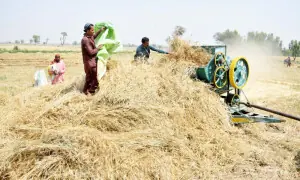
Leaders within Pakistan's farming community have expressed strong dissatisfaction with the recently presented budget, arguing that the agriculture sector received insufficient attention from Finance Minister Muhammad Aurangzeb. While industrialists acknowledged some positive proposals, agricultural leaders contended that the budget lacked meaningful incentives for their sector.
Nabi Bux Sathio, Senior Vice President of the Sindh Chamber of Agriculture, pointed out an allocation of Rs4.18 billion for research, but criticized the absence of clarity regarding targeted areas. He stressed the agriculture sector's increasing vulnerability to climate change, advocating for climate-resilient, high-yield seeds for crops such as wheat, cotton, rice, and sugarcane. Sathio also warned against the long-term unsustainability of relying on hybrid seeds for crops like rice, onion, and chili.
He deemed the Rs4.18 billion research allocation inadequate, stating that the sector requires substantially greater funding. Sathio also questioned the nature and transparency of the Rs7.3 billion allocated for cold storage facilities. He noted that Pakistan's textile industry has become dependent on imported cotton due to local production shortfalls, estimating that the country would spend foreign exchange on importing six to seven million bales. Furthermore, he highlighted the complete omission of the livestock sector, despite its significant contribution to agriculture's share in the GDP, suggesting cold storage funds be redirected to promote milk processing, meat production, and exports.
Mahmood Nawaz Shah, President of the Sindh Abadgar Board, echoed these sentiments, stating that the agriculture sector was not given serious consideration. He noted the sector's resilience following the 2025 floods, which primarily impacted Punjab. Shah also pointed out that while water infrastructure allocations were mentioned, major crops and the oilseed sector, which has potential to reduce food import bills, received little attention.
Separately, the Hyderabad Chamber of Small Traders and Small Industries, represented by President Mohammad Saleem Memon and Senior Vice President Ahmed Idrees Chohan, welcomed some economic and tax reforms. However, they emphasized the continued need for concrete measures to address issues faced by small traders, SMEs, and small industries. They cited the absence of a comprehensive national package for SMEs, which account for a large portion of employment, local production, and business activity in Pakistan. Concerns included a lack of effective programs for low-interest financing, industrial modernization, technology upgradation, and export support. Idrees also noted that the demand for the restoration of the Final Tax Regime (FTR) was not met, although the reduction of withholding tax on exports from 2% to 1.25% was a positive step, emphasizing the need for a stable and predictable tax regime.
According to Dawn Pakistan, these statements were published on June 14th, 2026.
Advertisement
AdSense slot • inline


