
Pakistan Poverty Rises 7% Since 2018, Affecting 27 Million More People
Pakistan's national poverty rate has increased by seven percent over the past six years, pushing an estimated 27 million additional people into financial distress. The Economic Survey 2025-26 indicates that the total impoverished population in the country now stands at 70 million. The national poverty rate rose from 21.9% in 2018-19 to 28.9% in 2024-25, with rural areas experiencing a significantly higher surge compared to urban regions. This increase is attributed to various factors including economic shocks, inflation, and climate events.
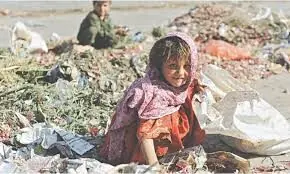
Pakistan has seen its national poverty rate surge by seven percent over the last six years, according to figures released in the Economic Survey 2025-26. This increase has pushed approximately 27 million more people into financial distress, bringing the total number of impoverished individuals in the country to 70 million.
The survey data reveals that the national poverty rate escalated from 21.9% in 2018-19 to 28.9% in 2024-25. Poverty rates were notably higher in rural areas, where they climbed from 28.2% to 36.2%. Urban poverty also saw an increase, rising from 11% to 17.4% during the same period.
Poverty incidence increased across all major provinces. In 2024-25, Balochistan recorded the highest poverty at 47%, followed by Khyber Pakhtunkhwa (KP) at 35.3%, Sindh at 32.6%, and Punjab at 23.3%. In comparison, the rates in 2018-19 were 41.8% in Balochistan, 28.7% in KP, 24.5% in Sindh, and 16.5% in Punjab. Balochistan consistently reported the highest poverty incidence, while Punjab maintained the lowest among the four provinces.
The surge in poverty is linked to prolonged economic shocks, including record-high inflation, currency depreciation, and International Monetary Fund (IMF) stabilization measures. Catastrophic climate events, such as floods, and the Middle East conflict were also cited as contributing factors. These conditions have weakened people's purchasing power, increased food insecurity, and strained families reliant on remittances.
The updated estimates also indicate a rise in inequality, as measured by the Gini coefficient. Nationally, the Gini coefficient increased from 28.4 in 2018-19 to 32.7 in 2024-25. Both urban and rural areas experienced this rise, with urban inequality moving from 31.0 to 34.4 and rural inequality increasing from 23.4 to 36.6 over the six-year period. This suggests that the rise in poverty coincided with wider disparities in income distribution.
Provincial inequality also showed an upward trend. In 2024-25, Sindh recorded the highest Gini coefficient at 35.9, followed by Punjab at 32.0, KP at 29.4, and Balochistan at 26.5. In 2018-19, the values were 29.7 for Sindh, 28.4 for Punjab, 24.8 for KP, and 21.0 for Balochistan. The survey notes that recent pressures on household welfare were accompanied by widening disparities in income distribution across all provinces.
Pakistan's national poverty estimates are based on the cost of basic needs (CBN) approach, which defines the poverty line as the minimum expenditure required to meet essential food and non-food needs. (Source: Dawn Pakistan)
Advertisement
AdSense slot • inline


