Pakistan Senate Panel Approves 5% Tax on Social Media Earnings
Pakistan's Senate Standing Committee on Finance has approved a five percent tax on earnings generated through social media platforms by both local and foreign digital content creators, as part of ongoing reviews for the Finance Bill 2026. This tax will apply to annual incomes between Rs600,000 and Rs1.2 million, with incomes below Rs600,000 remaining exempt. The government also reiterated its intention to gradually phase out the super tax, while a proposed retail taxation scheme faced criticism from lawmakers. The National Assembly Standing Committee on Finance has requested detailed estimates of revenue generation and relief measures to assess their overall economic impact.
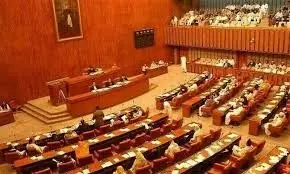
A parliamentary committee in Pakistan has approved a five percent tax on earnings generated through social media platforms by both local and foreign digital content creators. This decision was made on Monday as lawmakers reviewed proposals under the Finance Bill 2026, acknowledging the increasing role of social media as a source of income for influencers and online entrepreneurs.
The Senate Standing Committee on Finance, chaired by Senator Saleem Mandviwalla, endorsed the mechanism for integrating social media earnings into the tax net. Finance Minister Muhammad Aurangzeb and Federal Board of Revenue (FBR) Chairman Rashid Mahmood Langrial briefed the committee. Under the proposed framework, annual social media income up to Rs600,000 would be exempt, while earnings between Rs600,000 and Rs1.2 million would be subject to a five percent tax. The FBR chairman stated that social media earnings should be treated as any other taxable income. Concerns were raised by some committee members, including Senators Saleem Mandviwalla and Abdul Qadir, who warned that higher taxes might discourage foreign exchange inflows.
Finance Minister Muhammad Aurangzeb reiterated the government's intention to gradually phase out the super tax. Minister of State for Finance Bilal Azhar Kayani confirmed that the first six slabs of the super tax have already been eliminated. Fertiliser, banking, and petroleum companies with incomes exceeding Rs500 million will continue to face a 10 percent super tax, while other sectors above this threshold will be subject to an 8 percent levy. A proposal by Senator Abdul Qadir to raise the super tax exemption threshold under the Finance Bill 2026 from Rs500 million to Rs1 billion was opposed by the FBR, citing a potential revenue shortfall of approximately Rs250 billion.
The National Assembly Standing Committee on Finance, led by MNA Naveed Qamar, also discussed the government’s proposed trader taxation scheme. Lawmakers criticized the initiative, while Minister Kayani defended it, arguing it would be unrealistic to bring 3.5 million shopkeepers into the tax net within a year. FBR Member Hamid Ateeq Sarwar noted that out of around 4.4 million commercial power connections in Pakistan, only 400,000 businesses are currently registered for tax. The scheme initially aims to include 100,000 large retailers into the documented economy, with provisions for auditing shopkeepers owning significant assets.
Further proposals examined included reducing the advance tax rate for exporters from two percent to 1.25 percent. Officials clarified that the inclusion of 19 additional items in Schedule III of the Sales Tax Act would not increase tax rates but would require manufacturers to display prices and taxes clearly. The so-called "pink tax" was reduced from 18 percent to zero, with officials indicating a name change for the levy.
Regarding insurance, the Senate committee approved taxing only the profit component of life insurance policies from Tax Year 2026, while exempting the principal amount. Payouts related to death, disability, and policies maturing after seven years would remain tax-free. Sales tax exemptions for property transfers resulting from inheritance following the death of parents were also endorsed.
Officials revealed that data analysis identified approximately 8,697 individuals holding deposits worth nearly Rs750 billion despite not paying income tax, highlighting efforts to broaden the tax base. The National Assembly committee directed the finance ministry and FBR to submit detailed estimates of revenue generation and relief measures to assess their overall economic impact, emphasizing the need for fair and consistent tax relief.
According to Dawn Pakistan, these discussions took place as part of ongoing parliamentary reviews for the Finance Bill 2026.