Physicists Demonstrate World's First Working Nuclear Clock
Physicists have successfully demonstrated the world's first working nuclear clock, utilizing a rare thorium nucleus for its timekeeping mechanism. This innovative device is expected to significantly enhance time precision. The nuclear clock also offers novel methods for investigating phenomena such as dark matter and the potential existence of a fifth fundamental force of physics.
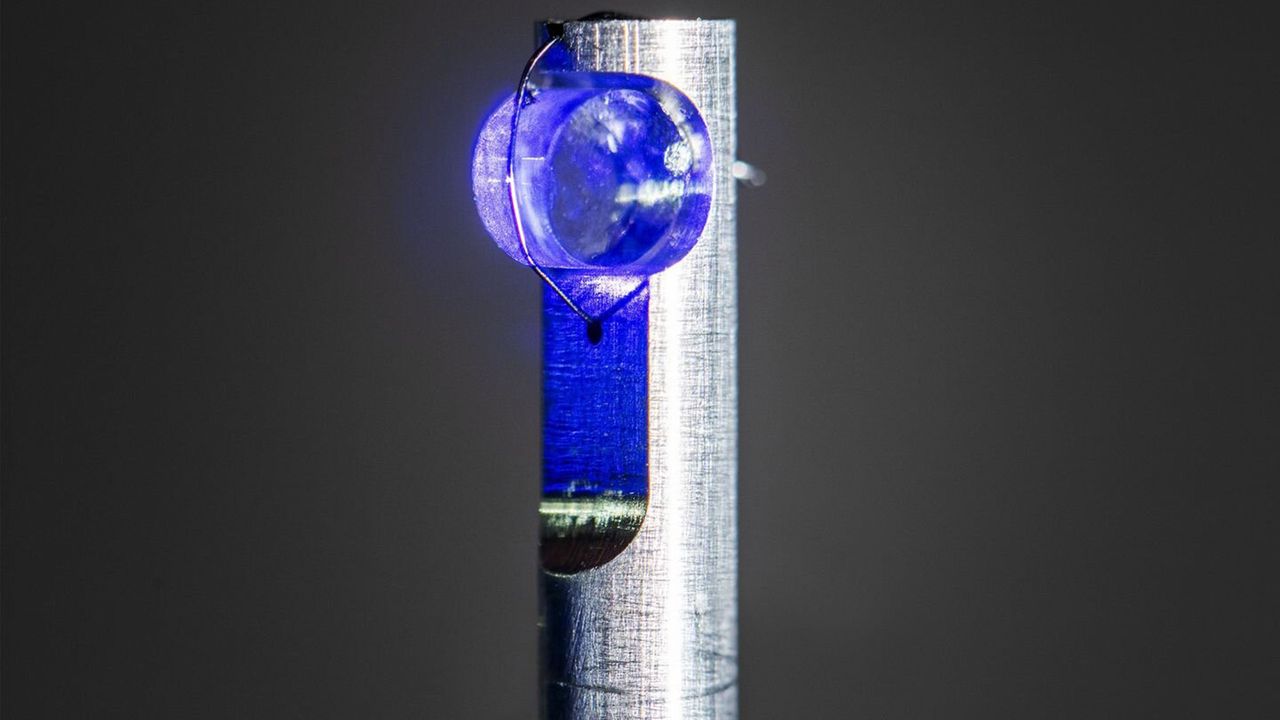
Physicists have successfully demonstrated the world's first working nuclear clock. This innovative device utilizes a rare thorium nucleus, specifically employing it as its timekeeping mechanism.
The achievement represents a significant milestone in metrology, which is the scientific study of measurement. While conventional atomic clocks operate by measuring transitions of electrons, the design of nuclear clocks aims to achieve even higher levels of precision by observing transitions occurring within the atomic nucleus itself.
This newly unveiled nuclear clock is anticipated to pave the way for the development of significantly more precise timekeeping instruments in the future. Such advanced accuracy could have profound implications across numerous scientific disciplines and technological applications.
Beyond its potential for improved timekeeping, the device also opens new avenues for fundamental physics research. Scientists believe it could provide novel methodologies for investigating elusive dark matter. Additionally, it may contribute to the potential detection of a fifth fundamental force of physics, which would significantly expand humanity's understanding of the universe's basic interactions.
According to Live Science, this development marks a crucial step in advanced scientific instrumentation.