PTI Senator Ali Zafar Rejects Budget 2026-27, Citing Lack of Growth and Public Welfare
Senator Syed Ali Zafar, PTI’s parliamentary leader in the Senate, has rejected the Budget 2026-27, labeling it a "budget of broken promises" that fails to achieve public welfare or long-term economic growth. During a Senate debate, Zafar criticized the government for neglecting 11 key areas, including industrialization, agriculture, job creation, and education. He attributed the budget's failures to government incompetence and a lack of political stability, rather than external factors. Other senators also voiced concerns, with JUI-F's Maulana Attaur Rehman criticizing the budget and the security situation in Khyber Pakhtunkhwa, and PTI's Mushal Azam warning of public anger over economic hardship.
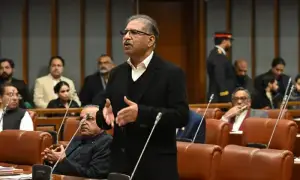
PTI’s parliamentary leader in the Senate, Barrister Syed Ali Zafar, has rejected the budget for 2026-27. Speaking during a Senate debate on Tuesday, Zafar described the budget as a document that achieves neither public welfare nor long-term growth, terming it a “budget of broken promises” built on “eleven deadly sins.” He emphasized that a budget should aim for trickle-down benefits for the poor and a credible strategy for economic growth and job creation, objectives he believes this budget fails to meet.
Senator Zafar identified 11 areas he stated the government had overlooked. These included a long-term growth strategy, industrialization policy, agricultural planning despite rising imports of cotton, wheat, and sugar, a roadmap for boosting exports, a job creation strategy for youth, and a plan to expand the IT sector. He also pointed to the absence of a solution for circular debt or a coherent energy policy, provisions for dams and water conservation, a response to climate change, a strategy for population growth, and attention to education.
Zafar criticized the government’s approach, noting its historical reliance on International Monetary Fund (IMF) programmes and imposing additional taxes on the public. He attributed the government's inability to solve fundamental problems to incompetence and a broader failure of governance and economic management, rather than ill intent. Zafar highlighted that this is the current government’s fifth budget, with previous ones offering excuses instead of results, now blaming external factors.
He further stated that the government had broken 10 “records of failure” and identified seven downward-trending indicators: exports, standard of living, economic growth, investment, rupee value, business confidence, and government credibility. Zafar questioned the 4% growth target, likening it to a slow-moving tortoise. He also criticized the focus on taxing the salaried class while untaxed sectors remain outside the tax net, dismissing the “stabilisation budget” label as a “stabilisation of poverty, hardship and hopelessness.”
Other senators also criticized the budget. Jamiat Ulema-e-Islam-Fazl’s (JUI-F) parliamentary leader, Maulana Attaur Rehman, raised concerns over the security situation in Khyber Pakhtunkhwa, stating that economic stability requires restoring peace in KP and Balochistan. He also noted a tax imposed on tobacco, a key crop in KP. PTI Senator Mushal Azam rejected the budget, asserting it offered nothing for the poor and warned of public anger if economic hardship persisted. PPP’s Zameer Hussain Ghumro suggested the budget should include more incentives for public welfare.
According to Dawn Pakistan, Senator Zafar's rejection of the budget was primarily due to its “harsh and burdensome nature.”