Strategic Tire Management Defined F1 Spanish Grand Prix
The recent Formula 1 Spanish Grand Prix at the Barcelona-Catalunya circuit heavily emphasized strategic tire management due to the track's abrasive surface and high downforce demands. Unlike earlier races this season, which often featured one-stop strategies, the 66-lap Spanish GP necessitated at least three sets of Pirelli tires per car. This requirement pushed teams to explore various pit stop strategies, including the "undercut" tactic, where drivers pit early for fresh rubber to gain an advantage over competitors still on older, slower tires.
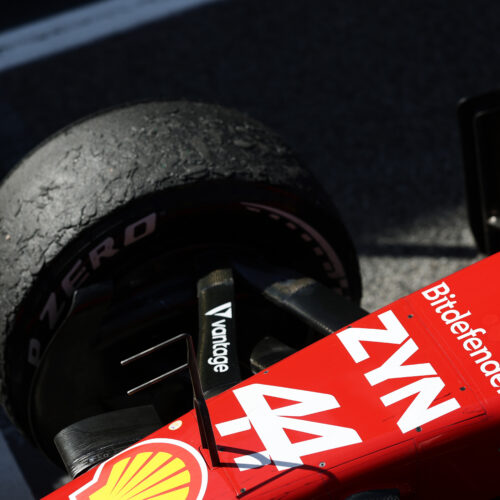
The Formula 1 Spanish Grand Prix recently took place at the Barcelona-Catalunya circuit, a purpose-built track known for its fast corners and an abrasive surface. These characteristics make downforce exceptionally crucial for car performance, enabling higher speeds through corners and reducing the energy required on subsequent straights. Effective energy management has become as vital in F1 as it is in other racing series like Le Mans, Formula E, or IndyCar.
High downforce also minimizes car sliding, which in turn reduces tire wear—a critical factor that influenced race strategies. While most F1 races this season have been one-stop affairs, the 66-lap challenge at Catalunya suggested a need for at least three, and potentially four, sets of Pirelli tires to complete the race.
Tires degrade by approximately 0.2 to 0.3 seconds per lap as they wear. This degradation opened up strategic opportunities, notably the "undercut." This tactic involves a driver pitting early for fresh tires, capitalizing on the tire offset against rivals to set faster lap times while competitors continue on older, slower rubber. If executed effectively, an undercut can result in a driver emerging ahead after their rivals make their own pit stops.
Implementing a four-stint strategy, which involves one additional pit stop, incurs a time penalty of around 22 seconds. This duration accounts for driving through the pit lane, stopping for a tire change (assumed to be under three seconds), and exiting the pit lane. However, by using each set of tires for fewer laps, teams can push them harder, potentially offsetting the time lost during the pit stop and gaining overall track position.
According to Ars Technica, these strategic considerations highlight how traditional strategy battles can still be a thrilling aspect of modern Formula 1.