Tesla Co-founder Expresses Concern Over U.S. Grid Capacity Amid AI Boom
JB Straubel, Tesla co-founder and CEO of Redwood Materials, voiced significant concern regarding the U.S. electrical grid's ability to support the accelerating artificial intelligence (AI) boom. Speaking at the Fortune Brainstorm Tech conference, Straubel highlighted China's rapid expansion of power generation compared to the U.S., where data center development faces delays and cancellations due to grid limitations. He emphasized the critical need for substantial increases in power generation, storage, and better utilization of the existing grid infrastructure to maintain U.S. competitiveness.
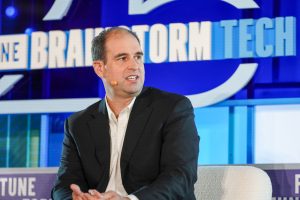
JB Straubel, a co-founder of Tesla and current CEO of Redwood Materials, has expressed serious apprehension about the capacity of the U.S. electrical grid to meet the escalating demands of the artificial intelligence (AI) boom. Speaking at the Fortune Brainstorm Tech conference in Aspen on Monday, Straubel noted that China is rapidly constructing new power generation facilities to fuel its AI development, while the U.S. grid struggles to keep pace, leading to delays and cancellations of data center projects.
Straubel, who departed Tesla in 2019, stated, “I think we should be really worried.” He added that the current grid “can’t handle it” due to the unprecedented pace of energy demand growth. Projections indicate U.S. electricity demand could surge by 50% to 80% between 2024 and 2050. Redwood Materials, originally focused on electric-vehicle battery recycling, is expanding its focus to provide battery energy storage for hyperscalers and the grid. This week, the company announced a partnership with General Motors to use recycled EV batteries for plant operations.
Panelists at the conference offered various perspectives on the challenge. Dana Guernsey, co-founder and CEO of Voltus, acknowledged that the grid “can’t handle it yet,” emphasizing the potential for improvement. She stressed the importance of maximizing output from the existing grid through solutions like demand response and virtual power plants, which encourage industrial and residential users to manage energy consumption and return excess renewable energy to the grid.
Tori Shivanandan, Chief Operating Officer for Radiant, which is developing portable nuclear microreactors, maintained a positive outlook. She stated that when facing significant challenges, America typically responds with innovation and construction.
Straubel underscored that grid inadequacies could result in delayed projects and the migration of data centers overseas, affecting U.S. competitiveness. He noted that over half of all data center projects are currently behind schedule. He also highlighted the necessity for approximately 100 times more energy storage on the grid than currently available to integrate diverse power sources effectively. Additionally, he mentioned the growing public opposition to data centers and concerns about rising electricity prices.
According to Fortune, these discussions highlight the complex challenges and potential solutions for the evolving energy landscape.
Advertisement
AdSense slot • inline