U.S.-Iran Interim Deal Spurs Hopes for Gulf Economic Recovery
The United States and Iran have agreed to an interim deal, concluding over 100 days of conflict. This agreement includes a 60-day ceasefire extension and guarantees free passage for shipping through the Strait of Hormuz. Expected to be formally signed in Geneva, the deal has reportedly brought a sense of relief to Gulf Cooperation Council states. The region has a historical record of rapid economic recovery following significant disruptions, supported by strong financial foundations and strategic initiatives.
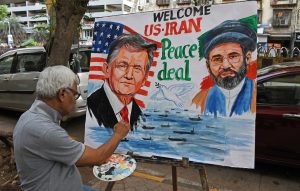
The United States and Iran have reached an interim agreement aimed at ending more than 100 days of conflict. Announced on Sunday evening, the memorandum of understanding (MOU) provides for a 60-day ceasefire extension and ensures free passage for shipping through the Strait of Hormuz. The formal signing of this deal is scheduled to occur in Geneva on Friday.
The agreement has reportedly generated relief among the Gulf Cooperation Council (GCC) states, which have been directly affected by the recent conflict. Historically, the Gulf region has demonstrated a robust capacity for rapid economic recovery after major shocks. Notable examples include Kuwait's economic rebound following its liberation in 1991 and Dubai's swift recovery in its tourism sector after the COVID-19 pandemic.
Previous recoveries were bolstered by factors such as substantial oil revenues, significant overseas assets, government-led reconstruction efforts, and strong state finances, including sovereign wealth funds. More recently, Dubai's resurgence was aided by large-scale events like Expo 2020 and the Qatar World Cup, alongside strategic leveraging of its global aviation hub status and the implementation of tax-free incentives, visa, and citizenship reforms.
Despite potential investor caution, the economic fundamentals of GCC states largely remain sound. In May, Fitch maintained credit ratings and stable outlooks for five GCC states, excluding Oman. This was primarily attributed to their substantial fiscal buffers, which serve as a cushion against economic shocks. These healthy financial reserves are expected to enable the region to remain committed to its economic diversification strategies. The United Arab Emirates' exit from OPEC also provides it with increased immediate liquidity and fiscal flexibility.
Regarding oil production, Wood Mackenzie estimates that fields impacted by the Strait of Hormuz closure could return to 70% of pre-conflict production within three months and 90% within six months, assuming a measured and controlled ramp-up. However, safely transiting oil through the Strait of Hormuz is anticipated to present a significant ongoing challenge. The recent conflict has reportedly strengthened the Gulf's determination to accelerate reforms, with recovery plans currently being developed.
According to Fortune, the U.S.-Iran interim deal aims to foster stability in the Gulf region.