US-Iran Tentative Peace Deal Faces Obstacle Over Israeli Presence in Lebanon
A tentative agreement between the United States and Iran aimed at ending a prolonged conflict is reportedly encountering a significant hurdle: the demand for an Israeli withdrawal from Lebanon. Iran's top diplomat, Abbas Araghchi, stated that the deal necessitates Israel's exit from territories occupied in Lebanon, a condition Israeli Prime Minister Benjamin Netanyahu has explicitly rejected, vowing to maintain Israel's presence "as long as necessary." A U.S. official, however, indicated that the deal does not include such a withdrawal, highlighting conflicting interpretations of the unpublished agreement.
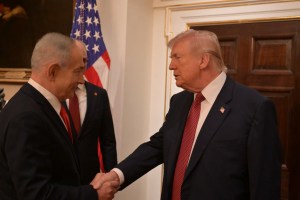
A tentative deal between the United States and Iran to end the ongoing conflict faces a major challenge concerning Israel's military presence in Lebanon. Iran's Foreign Minister, Abbas Araghchi, stated on Tuesday that the agreement would require Israel to withdraw from Lebanon, a condition Israel has already rejected.
Israeli Prime Minister Benjamin Netanyahu affirmed on Monday that Israel would remain in Lebanon "as long as necessary." Conversely, a U.S. official, who spoke anonymously to discuss the agreement's outlines, said the deal did not call for an Israeli withdrawal, indicating differing interpretations of the unpublished accord.
Israel joined the U.S. in launching strikes on Iran in February and has since engaged the Iran-backed Hezbollah militant group in Lebanon, seizing significant portions of the country. Foreign Minister Araghchi emphasized that Israel's continued occupation of southern Lebanon would violate the terms of the tentative agreement.
U.S. President Donald Trump expressed dissatisfaction with Israel's handling of the situation in Lebanon and with Hezbollah, stating that he was "not happy" and that the conflict "just goes on forever." He added that this situation could cast a "negative light on the big deal" with Iran. Israeli strikes in Lebanon have reportedly resulted in nearly 4,000 deaths, including hundreds of civilians, and displaced over one million people.
Pakistan, acting as a key mediator, has previously indicated that the deal called for an end to military operations, including in Lebanon, consistent with Iran's long-standing insistence. Negotiations to end the war have previously been plagued by disagreements, leading to an uneasy ceasefire that failed to become a permanent resolution, leaving the Strait of Hormuz effectively shut. Separate U.S.-mediated direct negotiations between Israel and the Lebanese government have also yielded several unfulfilled ceasefires.
Two regional officials with direct knowledge of the interim deal, speaking anonymously to The Associated Press, reportedly support Araghchi's understanding. They indicated that the accord would require Israel to leave nearly all its occupied territory in Lebanon, with Iran insisting on Lebanon's inclusion during the final negotiation stages. According to Fortune, these disagreements could potentially unravel the agreement, risking a resumption of full-scale hostilities.