US Screwworm Outbreak Response Faces Delays as Key Facility Remains Years Away
The New World screwworm has been detected in six cattle in Texas, marking the first US livestock cases in five decades and raising alarms for the nation's beef industry. This outbreak arrives as the US cattle herd is at a 75-year low due to drought and high production costs. A crucial sterile fly production facility in Texas, intended to halt the parasite's reproduction, is not expected to begin operations until November 2027, potentially allowing further spread of the pest.
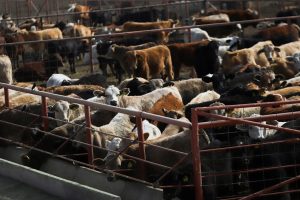
A deadly cattle parasite, the New World screwworm, has recently been detected in the United States, threatening the beef industry. The screwworm, a fly whose larvae infest the wounds of warm-blooded animals, was found in six cattle in Texas, the country's top producer. This marks the first instance of screwworm in US livestock in five decades; a previous outbreak in Texas was eradicated with the help of sterile flies.
The US's primary method for suppressing the parasite involves releasing sterile flies to prevent reproduction. However, a key facility under construction at Moore Air Base in Texas, which is intended to breed these sterile flies, is not slated to begin operating until November 2027. This facility aims to produce an initial 100 million flies per week, with full capacity of 300 million flies taking even longer.
Currently, North America's only operational sterile fly production site is in Panama, dispersing 100 million insects weekly. Another plant in Metapa, Mexico, could potentially double overall output by early summer. However, these facilities provide only a fraction of the sterile flies needed for an effective US response.
Agriculture Secretary Brooke Rollins stated that the US will not be able to eradicate the screwworm until hundreds of millions more flies are available, though containment efforts are underway. The US Department of Agriculture (USDA) has opened a new fly dispersal facility in Texas and developed a method to double production using a male-only strain of sterile flies. These preemptive investments are believed to be mitigating some immediate risk.
Sterile flies are produced by sterilizing screwworm pupae with radiation. The male flies are then released to mate with wild female flies, resulting in unfertilized eggs. Since female screwworms typically mate only once and can lay over 3,000 eggs in a two-to-four-week lifespan, this method prevents the birth of new screwworms. Without sufficient sterile flies, livestock producers face increased costs for monitoring and treating animals, which could further drive up cattle prices and hinder efforts to rebuild the national herd.
According to Fortune, the US cattle industry is already facing a difficult period, with the national herd at a 75-year low due to drought and high production costs. (Source: Fortune)