AJK Elections: PPP Calls for Withdrawal of Refugee Seat Schedule Amidst Dialogue Push
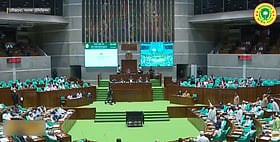
The Azad Jammu and Kashmir (AJK) chapter of the Pakistan Peoples Party (PPP) has urged the region's election commission to withdraw the election schedule for 12 refugee seats in the Legislative Assembly. This call comes as Information Minister Ataullah Tarar emphasized the importance of resolving differences through democratic and constitutional means, stressing dialogue and peaceful protest. The Joint Awami Action Committee (JAAC) had previously called for widespread protests demanding the abolition of these seats, which are reserved for refugees from Indian-occupied Jammu and Kashmir who settled in mainland Pakistan after 1947. PPP-AJK President Chaudhry Muhammad Yasin indicated that holding elections appears difficult under current circumstances and advocated for negotiation to defuse the ongoing crisis.
The Azad Jammu and Kashmir (AJK) chapter of the Pakistan Peoples Party (PPP) has formally requested the AJK election commission to withdraw the election schedule for 12 refugee seats in the Legislative Assembly. This appeal was made on Sunday, with elections for these seats set for July 27.
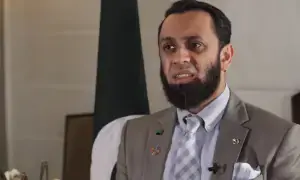
Pakistan's Information Minister Ataullah Tarar, speaking to the media outside Parliament House, called for the resolution of differences through democratic and constitutional means. He underscored that elections are the most effective method for securing a public mandate in a democracy. Tarar affirmed AJK's status as a top priority for Pakistan, highlighting ongoing public welfare initiatives and significant financial allocations in the upcoming budget for AJK's public facilities, including electricity. He also stated that decisions concerning national interest and public welfare should take precedence over political considerations, asserting that while peaceful protest is a fundamental right, vigilantism is unacceptable and dialogue is crucial for resolving disputes.
These 12 seats are reserved for refugees who migrated from Indian-occupied Jammu and Kashmir to mainland Pakistan following 1947. Elections for these seats are conducted separately from the 33 general seats in AJK, with refugees registered in 12 constituencies across Pakistan casting their votes. The seats have historically been politically sensitive, marked by disagreements over voter lists, delimitation processes, and constitutional amendments.
The Joint Awami Action Committee (JAAC) had previously initiated widespread protests, advocating for the abolition of these 12 seats. PPP-AJK President Chaudhry Muhammad Yasin, during a press conference, characterized the issuance of the election timetable just three days before the JAAC’s June 9 protest call as an inappropriate decision. He expressed concerns that holding elections under the current circumstances appears challenging and urged the Election Commission to withdraw the schedule to allow for further consultative processes. Yasin stressed that the PPP is against confrontation, arguing that the 12 refugee seats cannot be more valuable than human lives. He also noted that the government had implemented 37 out of 38 demands made by the JAAC in an agreement from October of the previous year, with only the constitutional matter regarding refugee seats still under consideration.
Parliamentary Leader in the AJK Legislative Assembly Sardar Muhammad Yaqoob Khan and Senior Minister Mian Abdul Wahid also echoed the demand for the immediate withdrawal of the election schedule. Khan emphasized that elections are secondary to human lives and that reconciliation necessitates the schedule's withdrawal. Wahid prioritized saving the state, stating that AJK cannot endure further tension and conflict, and urged all parties to seek an agreeable solution through dialogue. PPP Chairman Bilawal Bhutto-Zardari also supported the call for the AJK Election Commission to withdraw its “premature election schedule.”
According to Dawn Pakistan, Yasin warned of potential external exploitation, specifically by India, which might attempt to capitalize on the prevailing situation. He reiterated that dialogue, political harmony, and the continuity of the democratic process are essential for resolving all problems, especially given the existing shortages of essential commodities and uncertainty in AJK.
Advertisement
AdSense slot • inline