Fafen Calls for Overhaul of Khyber Pakhtunkhwa Right to Information Act
The Free and Fair Election Network (Fafen) has called for comprehensive legal and institutional reforms to Khyber Pakhtunkhwa's (KP) Right to Information (RTI) Act. Twelve years after its enactment, Fafen notes the pioneering law remains underutilised, vulnerable to disinformation, and hampered by weak enforcement and structural gaps. A policy brief identified key flaws, including an insufficient definition of 'public body' and a lack of enforcement mechanisms, alongside institutional autonomy issues for the KP Information Commission. Fafen's recommendations aim to transform the act into an effective tool for proactive disclosure and public accountability.
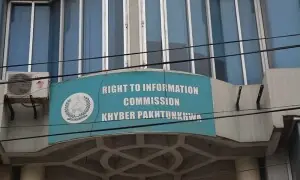
The Free and Fair Election Network (Fafen) has urged the Khyber Pakhtunkhwa (KP) Assembly and provincial government to implement targeted reforms for the province's Right to Information (RTI) Act. Despite KP being the first Pakistani province to enact such a law twelve years ago, Fafen's assessment indicates the framework is underutilised and susceptible to disinformation due to weak enforcement and structural deficiencies.
Fafen's policy brief, titled “From Pioneer to Performer: Making Khyber Pakhtunkhwa’s Right to Information Act Work Against Disinformation,” highlighted that public bodies proactively disclose, on average, only 57 percent of the information mandated by the law. This finding is based on an assessment of 190 provincial public bodies' websites. Such information gaps are noted to create opportunities for speculation, misrepresentation, and false narratives concerning government actions.
The policy brief identified three primary legal flaws within the act. Firstly, the definition of “public body” excludes numerous private entities and non-governmental organisations that receive public funds or contracts. Secondly, while proactive disclosure is mandated, the law lacks clear enforcement mechanisms, timelines, and penalties for non-compliance. Thirdly, public bodies present information in diverse formats, hindering data comparability, usability, and verification.
Institutionally, Fafen pointed out two significant gaps. The KP Information Commission reportedly lacks financial and operational autonomy, which impacts its ability to enforce the law effectively. Consequently, the commission is unable to conduct periodic record inspections or issue binding instructions on record management and disclosure timelines.
To address these issues, Fafen recommended widening the definition of “public body” to include all private and NGO entities receiving public money. It also proposed that the definition of “information” explicitly cover digital and machine-readable records, granting citizens rights to inspect documents, obtain certified copies, and receive information electronically. Recommendations further include empowering the commission to inspect records, issue binding instructions, and establishing a dedicated “Khyber Pakhtunkhwa Right to Information Fund” to ensure financial independence.
Additional suggestions encompass auditing annual accounts by the Auditor General of Pakistan, introducing digital tracking for RTI requests with automated notifications, developing an RTI mobile application, and allowing virtual hearings to improve accessibility. Fafen also called for mandatory, tailored disclosure formats for public bodies, to be developed and updated annually by the commission in consultation with departments and published on a central portal to enhance consistency and comparability.
According to Dawn Pakistan, Fafen's findings align with broader concerns regarding transparency in Pakistan, suggesting that upgrades to KP's law could establish a precedent for other provinces and the federal government.
Advertisement
AdSense slot • inline