Fed Chair Kevin Warsh to Unveil Policy Stance at First FOMC Meeting
Kevin Warsh is set to lead his inaugural Federal Open Market Committee (FOMC) meeting as chairman of the U.S. Federal Reserve, where initial elements of his policy stance are anticipated to be made public. Having been in his role for several weeks, Warsh is expected to present a potentially dovish approach to monetary policy, a shift from his predecessor's cautious methods. This pivotal meeting will assess his inclinations against the committee's hawkish members, who are projected to advocate for interest rate increases.
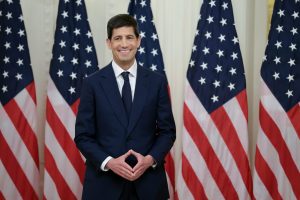
Kevin Warsh, the new chairman of the U.S. Federal Reserve, is slated to lead his first Federal Open Market Committee (FOMC) meeting beginning today. Upon its conclusion on Wednesday afternoon, Warsh is expected to address media, revealing aspects of his anticipated policy stance for the first time since taking office.
Warsh's approach is projected to be distinct from that of his predecessor, Jerome Powell. While Powell cautiously monitored artificial intelligence's impact on the labor market, Warsh reportedly holds a bullish outlook on AI's potential. His monetary policy stance is characterized as dovish, favoring a less "wait-and-see" approach. Warsh has also indicated an interest in rolling back elements of forward guidance, aiming to reduce the Fed's commitment to a predetermined path.
Wall Street generally anticipates Warsh will favor interest rate cuts, though he has maintained that he made no promises to the White House regarding monetary policy. His dovish leanings are reportedly influenced by his bullish view on AI, tightening on the long end of the curve, and a shrinking balance sheet. These inclinations are expected to face scrutiny during his first meeting as chairman.
His initial encounter with the FOMC will test his stance against the committee's hawkish members. Bank of America's U.S. economist, Aditya Bhave, noted that hawks are expected to be "on the offensive." Bhave suggested that several policymakers might project interest rate hikes in 2026, naming Hammack, Logan, and Schmid, and potentially Kashkari, Musalem, and Goolsbee.
Warsh has previously expressed criticism of the Fed's 'dot plot' tool, which records individual projections on short-term rates. Goldman Sachs's David Mericle has stated that Warsh is not expected to submit his own projections.
Warsh's experience includes serving as a governor under Chairman Ben Bernanke from 2006 to 2011, during the global financial crisis. In his time away from the central bank, he voiced criticism, suggesting the U.S. had become a "banana republic" due to the Fed's consistent purchase of government debt. He also stated in April 2025 that the Fed needed to re-evaluate its relationship with the public. (Source: Fortune)