
Historian Proposes New Theory on Medieval Monk Eilmer's Comet Sightings
A historian from the University of Leicester suggests that Eilmer of Malmesbury, a medieval Benedictine monk known for his early attempt at flight, may have witnessed two different comets in his lifetime: one in 1018 and Halley's Comet in 1066. This theory challenges the traditional interpretation that Eilmer saw Halley's Comet twice, first in 989 and then again in 1066. The new proposal by James Aitcheson could significantly alter the estimated timeline of Eilmer's birth and his renowned flight experiment.
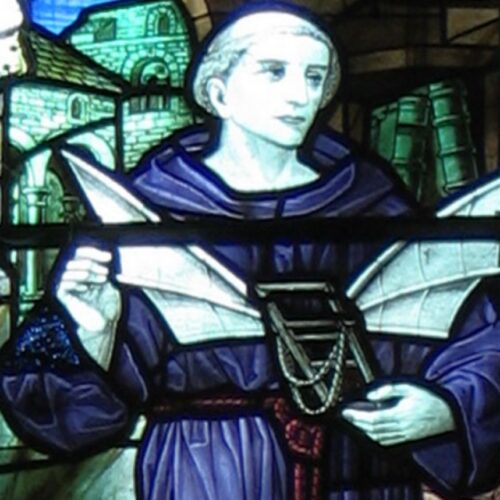
A recent historical analysis proposes a revised timeline for the comet sightings of Eilmer of Malmesbury, a Benedictine monk from the 11th century. James Aitcheson, a historian at the University of Leicester, suggests that Eilmer likely saw two distinct comets: one in 1018 during his youth and Halley's Comet in 1066.
Eilmer is historically recognized for a legendary attempt at flight in the early 11th century. According to the 12th-century historian William of Malmesbury, Eilmer fashioned crude wings from willow wood and cloth and jumped from a 150-foot abbey tower. He reportedly glided approximately 600 feet before crash-landing and breaking both his legs. This feat, which occurred when Eilmer was described as being "in his first youth," is generally estimated to have taken place between 1000 and 1010.
William of Malmesbury's account also mentions Eilmer witnessing Halley's Comet in 1066 when he was "advanced in years," quoting the monk as saying, "It is long since I saw you." This statement has traditionally led some historians to believe Eilmer had previously seen Halley's Comet during its earlier appearance in 989, implying a birth year no later than 984 and placing him in his 80s in 1066.
However, Aitcheson, in a paper published in the journal *Notes and Queries*, argues against this interpretation. He suggests that the earlier comet Eilmer saw was not Halley's Comet in 989 but rather a different comet that appeared in 1018. If this theory holds true, Eilmer would have been born later than previously assumed, and his famous flight attempt would have occurred sometime between the 1020s and 1040s.
(Source: Ars Technica)
Advertisement
AdSense slot • inline

