
MIT Affiliates Secure Prestigious 2026 Hertz Foundation Fellowships
Three current Massachusetts Institute of Technology (MIT) students and one incoming graduate student have been awarded 2026 Hertz Foundation Fellowships. These prestigious awards provide five years of financial support, including a stipend and full tuition equivalent, granting recipients significant autonomy to pursue groundbreaking research in applied sciences, engineering, and mathematics. The fellowships recognize doctoral students addressing pressing challenges in science and technology across the United States.
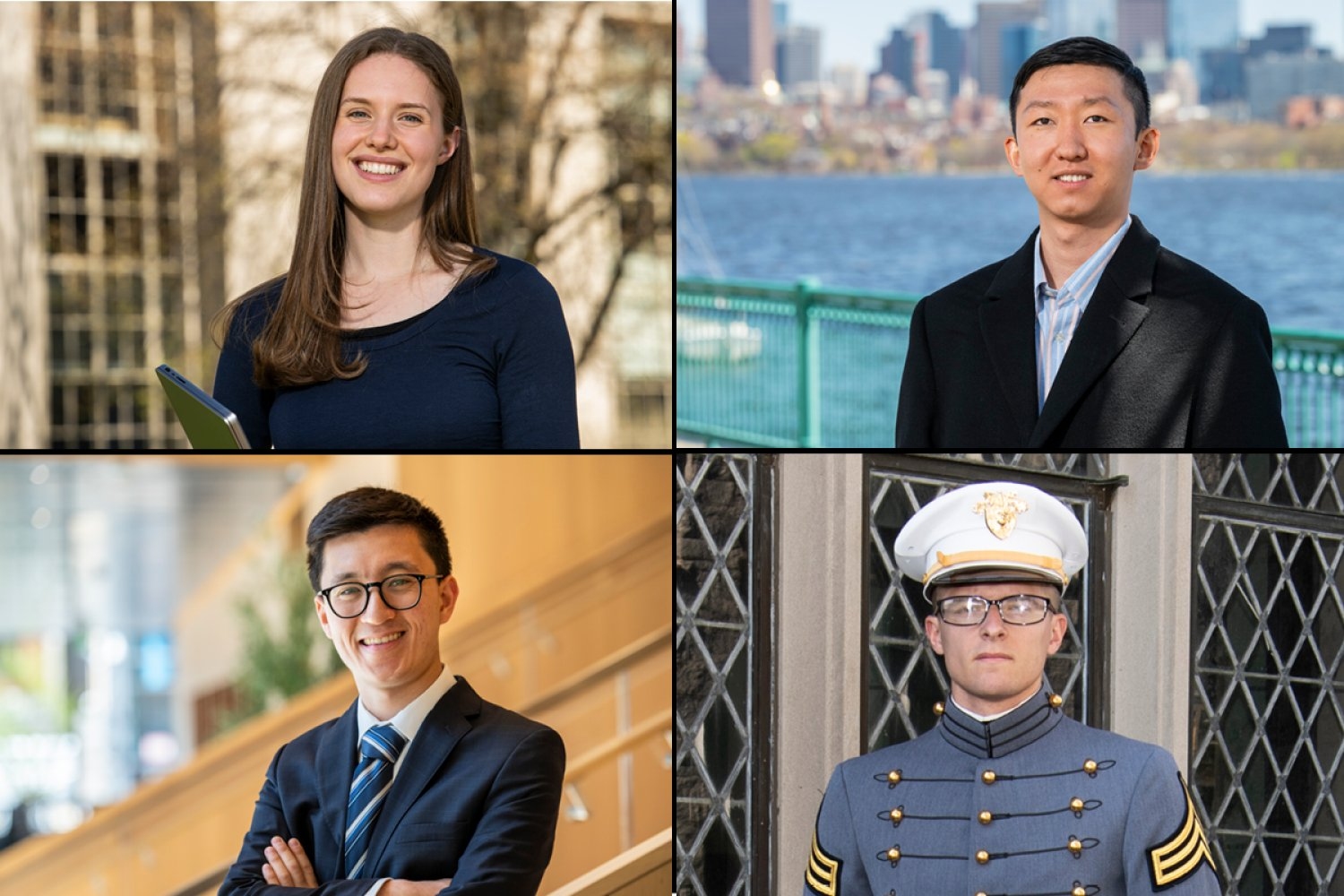
The Hertz Foundation has announced the recipients of its 2026 fellowships, which include three current students and one incoming graduate student affiliated with MIT. The recipients are Annika Marschner, Alvin Q. Meng, Zachary S. Siegel, and Matthew Wanta.
This prestigious science and technology award offers each recipient five years of financial support, encompassing a stipend and the equivalent of full tuition. This provision aims to give fellows a notable degree of autonomy to pursue innovative research in their graduate studies.
Philip Welkhoff, a Hertz Fellow and director of the malaria program at the Gates Foundation, co-led the selection process. He commented on the cohort's fearlessness in tackling new challenges and advancing scientific frontiers, noting their creativity, grit, and vision.
Beyond financial aid, fellows gain lifelong access to Hertz Foundation programs, including events, mentoring, and networking opportunities. The foundation has named over 1,300 fellows since its establishment in 1963, fostering collaborations that have contributed to breakthroughs in advanced medical therapies, global defense networks, and the James Webb Space Telescope.
Annika Marschner ’26, who majored in mechanical engineering, will begin her PhD at MIT in the fall. Her undergraduate research focused on developing novel technologies for biointerfacing and bio-inspired systems, including designs for robotic systems and improving dynamic motions in bio-inspired robotic limbs. As a graduate student, she plans to continue work on hardware and control system design in biologically relevant settings, particularly in assistive medical technology and surgical robotics.
Alvin Q. Meng is a doctoral student in inorganic chemistry, researching the fundamental interactions underlying chemical structure and reactivity, specifically iron-sulfur clusters under Professor Daniel L.M. Suess. Meng, who immigrated to the U.S. at age 10, received undergraduate degrees from the University of Virginia, where he studied dihapto-coordinated tungsten complexes.
Zachary S. Siegel is an electrical engineering and computer science graduate student pursuing a PhD in the Computer Science and Artificial Intelligence Laboratory. His work bridges robotics, cognitive science, and artificial intelligence. Siegel graduated summa cum laude from Princeton University with a BSE in computer science and a minor in philosophy. His senior thesis investigated how humans infer the goals of others in real-world environments.
These MIT-affiliated recipients are among 19 Hertz Foundation Fellows selected nationwide. (Source: MIT News AI)
