Pakistani Senators Express Alarm Over Rising National Debt and Economic Instability
Members of the Pakistani Senate have voiced significant concern regarding the nation's escalating debt and the absence of a clear strategy for economic stability. During discussions on the FY27 budget, presented on June 12 with Rs8,054 billion allocated for interest payments, senators from across the political spectrum highlighted the critical financial challenges. They noted that approximately 42.8 percent of the federal budget is consumed by debt servicing, severely limiting funds for development, social protection, and public investment. Critiques also focused on substantial losses from state-owned enterprises, the burden of indirect taxation, and declining climate-related allocations.
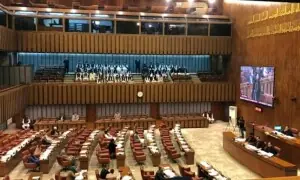
Senators in Pakistan have raised concerns over the country's increasing debt and the perceived lack of a clear economic stability roadmap. This alarm was sounded during discussions on the federal budget for Fiscal Year 2027, which was presented on June 12.
Senator Sherry Rehman, Vice President of the Pakistan Peoples Party (PPP) and parliamentary leader in the Senate, stated that roughly 42.8 percent of the federal budget is allocated to debt servicing, encompassing both interest and principal repayments. She emphasized that this substantial allocation significantly constrains resources for development, social protection, and public investment.
Senator Rehman also highlighted the financial burden posed by state-owned enterprises (SOEs), reporting losses of Rs832.848 billion in FY2025, with cumulative losses reaching Rs6.563 trillion. An additional Rs451 billion has been allocated to SOEs in the current budget. She called for reforms in governance and public expenditure, urging the government to streamline ministries and institutions with high operational costs. Rehman advocated for a fair taxation system based on direct taxes and a broader tax base, warning against over-reliance on indirect levies and expressing concern over the Petroleum Development Levy. She also noted declining climate allocations despite Pakistan's high vulnerability to climate change.
Leader of the Opposition in the Senate, Raja Nasir Abbas, criticized the budget, stating it failed to protect the public's political independence and risked increasing foreign economic control. He claimed that national debt had surged since the current government took office, projecting that the public would pay Rs8 trillion in interest this year. Abbas also cited the government's own poverty threshold of Rs8,432 in monthly income, suggesting 70 million people are poor, with an additional 20 million falling below the poverty line this year. He alleged the budget favored the wealthy while burdening ordinary citizens and questioned spending priorities, including those for education.
PTI Senator Mohsin Aziz also criticized the government, alleging election rigging and stating the budget offered nothing to the public. He claimed prices had doubled and national debt had increased from Rs44 trillion over 74 years to Rs97 trillion in the last four years. Aziz compared Pakistan's exports to India's $440 billion, noting a decline in Pakistan's economic position. He also pointed to a significant increase in wheat flour prices and criticized the design of the 200-unit electricity subsidy and the concept of "non-filers." Aziz stressed the importance of political stability for national development and urged a move away from reliance on the International Monetary Fund.
According to Dawn Pakistan, all senators appealed for sustainable economic reforms and, in some cases, for dialogue and political stability.