Radical Numerics Secures $50 Million to Advance AI-Generated DNA for Biology Reinvention
Radical Numerics, a startup founded by pioneers in generative genomics, has emerged from stealth with a $50 million seed funding round led by Emergence Capital. The company aims to revolutionize biology by teaching AI to understand entire biological systems, encompassing DNA, RNA, proteins, and other molecules, rather than focusing on individual components. This approach is intended to accelerate AI drug discovery, enhance biodefense capabilities, and improve diagnostic methods.
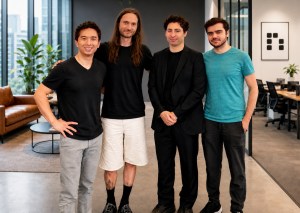
Radical Numerics, a new venture focusing on AI-driven biological systems, has announced a $50 million seed funding round. Emergence Capital led the investment, with additional participation from Obvious Ventures, Triatomic Capital, Factory, and First Spark Ventures. Patrick Collison, CEO of Stripe and co-founder of the Arc Institute, also supported the company in its pre-seed phase.
The startup's core technology involves training AI to interpret, write, and reason across all components of living systems, including DNA, RNA, proteins, and other molecules, within a single integrated model. This differentiates Radical Numerics from many current AI biology companies that often focus on single modalities, such as proteins or RNA.
The founding team, comprising CEO Eric Nguyen, Chief AI Scientist Michael Poli, President Stefano Massaroli, and CTO Armin Thomas, are recognized for their contributions to the field of generative genomics. Three of the founders previously developed core technology at Liquid AI, an MIT spinout. Together, they created Evo and Evo 2, which were the first AI models capable of generating DNA at scale, trained on the genomes of over 100,000 species. In September, researchers utilizing Evo's open-source resources successfully produced the world's first fully AI-designed functional virus, which was harmless to humans.
Radical Numerics posits that the primary bottleneck in drug development lies in comprehending how drugs interact within an entire biological system. The global AI drug discovery market is projected to reach $25 billion by 2035, and Radical Numerics seeks to address this market with its comprehensive, multi-modal AI approach.
The company has established early commercial partnerships. One collaboration focuses on applying its multi-modal model to pancreatic and multi-cancer detection. Another partnership involves working with a national laboratory to develop AI-powered pathogen detection and characterization capabilities, including for AI-generated pathogens. This latter initiative addresses the dual-use nature of its technology, which could potentially be used for designing biological weapons. To mitigate such risks, Andrew Weber, former U.S. Assistant Secretary of Defense for Nuclear, Chemical, and Biological Programs, has joined the company as an advisor, and future model releases will not automatically be open-source.
According to Fortune, the company's revenue model is evolving, combining API licensing, custom proprietary models for pharmaceutical partners, and milestone payments.