
Study Examines Earth's Lifespan as Sun Evolves
A new scientific study investigates the projected lifespan of life on Earth as the Sun undergoes its natural evolutionary process. Researchers Jacob Haqq‐Misra and Eric Wolf explored the complex interplay of solar changes and Earth's climate feedback loops over a timeline exceeding a billion years. The research focuses on how the Sun's eventual transformation into a red giant, anticipated in approximately 5 billion years, will impact planetary habitability and the long-term mechanisms that regulate Earth's climate.
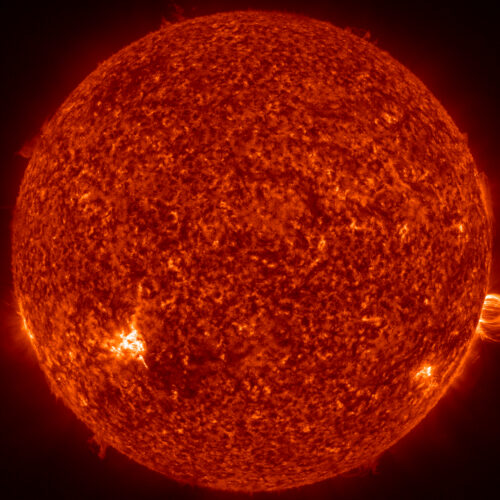
A recent scientific study by Jacob Haqq‐Misra of Blue Marble Space and Eric Wolf at the University of Colorado Boulder examines the projected lifespan of life on Earth. The research investigates how long the planet can sustain life given the inevitable evolution of the Sun, considering a timeline that extends beyond a billion years.
The study's premise acknowledges that the Sun is expected to gradually brighten as it matures. Ultimately, the Sun will transform into a red giant, a phase during which it is predicted to expand and engulf Earth. This complete solar evolution is anticipated to occur over approximately 5 billion years.
The researchers explored the factors influencing Earth's habitability leading up to this point, extending beyond just increasing solar radiation. A significant element in Earth's long-term climate stability is the cycling of carbon dioxide (CO2) through the planet's solid structures.
This process involves the weathering of silicate rocks on the surface, which converts atmospheric CO2 into carbonate. This carbonate then settles on the seafloor and can be subducted into the Earth's mantle through tectonic plate movement. Eventually, CO2 can cycle back into the atmosphere through volcanic activity, forming a crucial climate-regulating feedback loop.
According to Ars Technica, the study aims to determine precisely when along this multi-billion-year path life on Earth will cease to be viable.


