
Vast Underground Fungal Networks Quantified Globally for the First Time
New research has quantified the global extent and mass of arbuscular mycorrhizal fungal networks, revealing an astonishing 110 quadrillion kilometers of these underground threads. These networks play a critical role in Earth's ecosystems by forming symbiotic relationships with plant roots, providing essential nutrients in exchange for carbon. Annually, these fungal communities are estimated to sequester 1 billion tons of carbon underground, preventing it from entering the atmosphere.
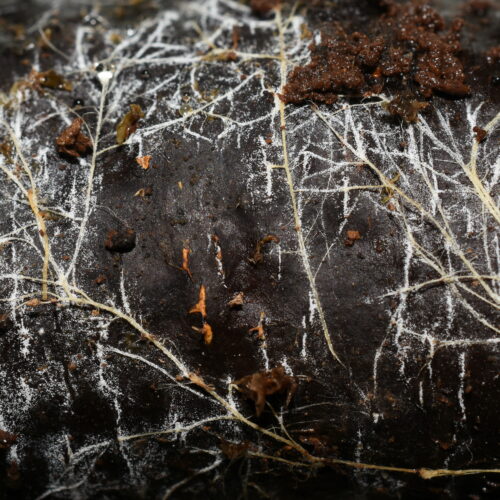
A new study, published in Science, has mapped and quantified the global distribution and mass of arbuscular mycorrhizal fungal networks for the first time. Researchers found that these intricate underground webs span a total length of 110 quadrillion kilometers worldwide.
These ultra-thin fungal threads engage in a vital symbiotic relationship with plant roots. They supply plants with crucial nutrients such as phosphorus and nitrogen, while in return, they receive carbon from the plants. Previous research indicates that these networks sequester approximately 1 billion tons of carbon underground each year, thereby playing a significant role in mitigating atmospheric warming.
Prior to this study, the global extent of these fungal networks had not been comprehensively mapped. The new research was spearheaded by the Society for the Protection of Underground Networks (SPUN), an organization dedicated to mapping mycorrhizal fungi networks. Their methodology involved a combination of literature review, analysis of soil samples collected from various global locations, machine learning techniques, and laboratory testing to estimate the systems' distribution and mass, identifying areas of highest density.
According to Ars Technica, the findings underscore the immense scale and ecological importance of these hidden underground systems.


