
Wall Street Utilizes New Catastrophe Models to Predict Wars and Geopolitical Risks
Financial institutions, including investors, banks, and insurers, are adapting natural disaster modeling methodologies to predict military conflicts and geopolitical risks. This shift comes as the number of countries engaged in external conflicts has nearly doubled since 2008, contributing to an estimated $22 trillion economic impact. Traditional risk models are proving insufficient, prompting firms like Verisk Maplecroft and Rand Corporation to develop new machine learning and AI-driven tools to forecast wars, government collapses, and international tensions, offering a forward-looking view for risk management.
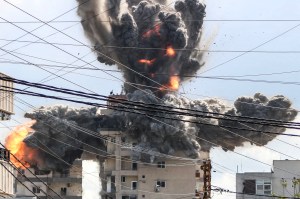
Wall Street is increasingly incorporating military conflicts into its risk scenarios, prompting a move to adapt methodologies previously used for modeling natural catastrophes. This adaptation aims to help investors, banks, and insurers predict future military conflicts.
Since 2008, the number of countries involved in external conflicts has almost doubled, surpassing 100. The economic impact of violence is now estimated at nearly $22 trillion, which accounts for over 10% of the world's gross domestic product. This rise in conflicts is challenging the finance industry's ability to forecast various economic factors, from oil prices to mortgage costs, and has led to a reevaluation of long-standing risk models.
Citigroup Inc. advises against relying on historical data-based models, while Morgan Stanley suggests a broad rethinking of geopolitical risk. Sam Haynes, head of data and analytics at Verisk Maplecroft, a global risk consultancy, noted that insurers and investors now seek predictive, forward-looking insights rather than retrospective analyses.
Verisk, known for its natural catastrophe models, has introduced new tools to address this need. Its Predictive War Index, released to clients in late May, uses a machine learning algorithm trained on political, economic, and social datasets from 1995-2022 to forecast the likelihood of war in a country over the subsequent 12 months. Verisk reported that back-testing indicated a 66% probability of war breaking out in Iran 1 1/2 months later, had the model been ready in early January.
Another model from Verisk, the Geopolitical Relations Index, monitors the evolving tension levels between pairs of countries. It considers factors such as past military clashes, governmental similarities, and geographical proximity to project power. Additionally, a Verisk model launched in October 2023 has reportedly predicted six out of seven government collapses since its inception, including the ouster of Bashar al-Assad in Syria in 2024 and the removal of Venezuela’s Nicolas Maduro in January.
The Rand Corporation also employs an artificial intelligence model to convert complex geopolitical questions into concrete probability estimates, drawing partly on aggregated opinions. In mid-May, this model indicated a 20% likelihood that Iran’s regime would not survive into 2027. Anthony Vassalo, director of the RAND Forecasting Initiative, stated that these results aim to inform policymakers on how specific actions could alter these probabilities.
Traditional models often fail in the current climate because events like trade blockades or sanctions do not conform to standard statistical distributions, according to Krishan Sharma, senior vice president of model risk management at Citi. The recent shipping disruptions in the Strait of Hormuz have highlighted vulnerabilities in global transport chokepoints, necessitating new risk algorithms for marine insurance and international trade.
According to Fortune, these developments signify a major shift in how the financial industry approaches and predicts global instability. (Source: Fortune)
Advertisement
AdSense slot • inline

