PCB Unveils Revamped Central Contracts Framework for Players
The Pakistan Cricket Board (PCB) announced a new central contract framework for its players, set to take effect from the next fiscal year beginning July 1, 2026. PCB Chairman Mohsin Naqvi unveiled the reforms, which introduce five distinct player categories, up from the previous four, and emphasize performance-based assessment. Key changes include allowing dedicated Test specialists to participate in overseas first-class competitions for the first time, a move aimed at strengthening red-ball cricket. Player selection will become largely data-driven, with analytics accounting for 85% of decisions, complemented by fitness, domestic cricket, and on-field performances.
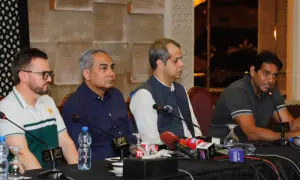
LAHORE: The Pakistan Cricket Board (PCB) on Monday revealed a new framework for awarding central contracts to its players, which will be implemented from the fiscal year commencing July 1, 2026. The announcement was made by PCB Chairman Mohsin Naqvi during a press conference at a local hotel in Lahore. Accompanying him were High Performance Centre Director Aaqib Javed, white-ball head coach Mike Hesson, and PCB Chief Medical Officer Dr Javed Mughal, among other officials. The PCB did not announce any changes to the national selection committee or coaching staff.
Prior to the announcement, Chairman Naqvi met with all 49 players from Pakistan’s red- and white-ball squads currently attending training camps in Lahore, briefing them on the upcoming central contract system. The new structure will categorize players into five tracks, an increase from the previous four. These categories include Track AB for dual-format (Test and ODI) cricketers, Track A for red-ball specialists, Track BC for white-ball specialists (ODI and T20 International), Track C for T20 franchise specialists, and Track D as a development category for young players.
The framework is underpinned by two core principles: players will be assessed only against others within their designated track, and each senior track will feature two internal tiers, enabling a player’s standing to fluctuate based solely on performance without necessitating a change in format. The Development Track will remain a single tier.
A significant policy shift grants dedicated Test specialists permission to participate in overseas first-class cricket competitions in leading cricketing nations. The PCB stated this move is a deliberate investment in red-ball quality, aiming to enhance the skills and preparedness of Test cricketers.
Player selection will largely be data-driven, with analytics carrying an 85 percent weightage in decisions, while selectors account for the remaining 15 percent. Fitness and medical assessments, mandatory domestic cricket participation, and on-field performances will form the basis for national team selection. Chairman Naqvi emphasized that the new system is built on accountability, ensuring a structured and documented assessment process.
Naqvi acknowledged that while bilateral series results have been encouraging, performances in major tournaments, including ICC and ACC events, have fallen short of expectations, with efforts underway to improve in these areas. Former Pakistan fast bowler and current selector Aaqib Javed noted that the reforms aim to make Test cricket more attractive through improved financial incentives, including enhanced match fees, but cautioned against expecting immediate results. White-ball head coach Mike Hesson expressed confidence in the reforms contributing to long-term desired results.
According to Dawn Pakistan, PCB Chief Medical Officer Dr. Mughal also clarified that it would not be possible to conduct players’ physical fitness tests in front of the media, a practice previously followed by the PCB.