
Ancient Quasar Reveals Rapid Supermassive Black Hole Growth in Early Universe
A record-breaking ancient quasar, active 12.9 billion years ago, provides significant insights into the rapid development of supermassive black holes. Its existence suggests that these colossal cosmic entities were able to age quickly during the universe's formative period, offering clues to their early formation mechanisms.
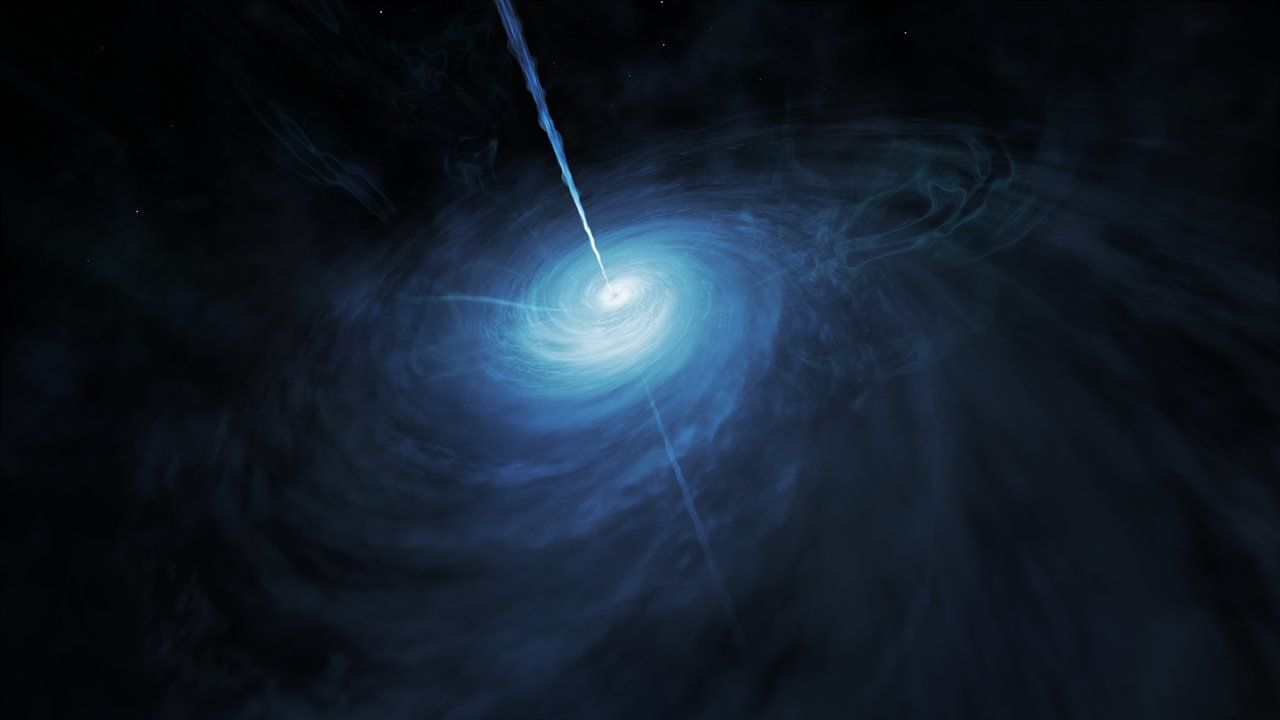
A quasar, observed to have existed 12.9 billion years ago, is offering new perspectives on the formation and growth of supermassive black holes in the early universe.
This ancient and record-breaking celestial object indicates that supermassive black holes possessed the capability to age rapidly during the universe's nascent stages. Such observations are crucial for understanding the processes that led to the development of these massive black holes, which are found at the centers of most galaxies today.
The findings contribute to the ongoing scientific inquiry into how such colossal structures could have formed and grown to immense sizes so early in cosmic history.
According to Space.com, this quasar could hold a key secret to black hole formation.


