Anthropic Updates Claude Design AI Tool with Enhanced Control and Efficiency
Anthropic has released a significant update for its AI design tool, Claude Design, which launched in April. The enhancements aim to address user pain points by improving adherence to design systems, providing more finely-tuned editing controls, and increasing token efficiency. Anthropic designer Nate Parrott noted that the update enables both non-designers to create brand-aligned prototypes and design administrators to exert greater control over the output. The goal is to position Claude Design as a key tool for the early stages of the design process, such as brainstorming and testing ideas.
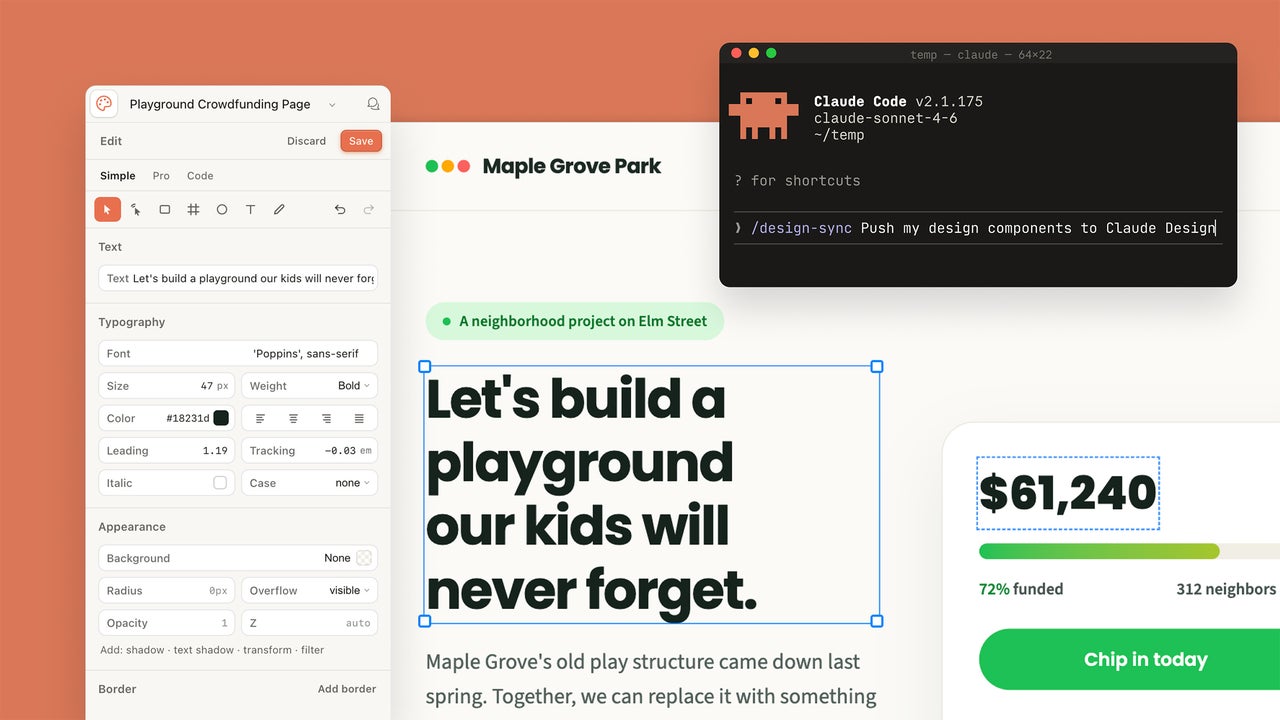
Anthropic Lab has rolled out a major update to Claude Design, its AI-powered design tool, which was initially introduced in April. This update follows several months of usage by designers and is intended to address their primary concerns and challenges.
The updated Claude Design now features improved adherence to existing design systems and offers more precise editing capabilities. Additionally, the tool allows users to achieve more with fewer tokens, enhancing efficiency. According to Anthropic designer Nate Parrott, the previous version sometimes lacked consistency when applying design systems across generated prototypes. The new iteration has been refined to ensure that non-designers can create prototypes that align with brand and style guidelines, while also providing design administrators with better control over the final output.
The update includes improved editing tools that offer granular control over elements such as layout, type choices, and button styles within interactive prototypes. For increased efficiency, Claude Design now shares usage limits with other Anthropic services, including Claude chat, Claude Cowork, and Claude Code.
Anthropic aims for Claude Design to become a go-to resource for designers during the brainstorming and initial testing phases of new ideas. Parrott explained that AI tools have made it easier to progress from a concept to a functional design more quickly. He noted that teams are increasingly using AI as a "pre-conviction" tool for early iteration, citing Disney Imagineering's use of a bespoke AI tool with Adobe to iterate designs for parks and cruises.
Such AI design tools can facilitate quick initial passes on ideas, helping teams determine if a concept warrants further development or engineering investment. This approach can potentially reduce the amount of a designer's time spent exploring concepts that may not proceed. The industry is currently assessing how AI will shape the future "stack" of tools for designers, with Anthropic hoping its enhanced tools will play a significant role. According to Fast Company, more designers are now empowered to code, suggesting a shift in design workflows.