
Feynman's Reverse Sprinkler Puzzle Solution Applied to "Silly Sprinklers"
A new study conducted by researchers at New York University's Courant Institute has confirmed the 2024 "momentum flux theory." This theory elucidates how the angular momentum of water flows drives rotation. The findings, published in the *Proceedings of the National Academy of Sciences*, apply the solution to physicist Richard Feynman's reverse sprinkler puzzle to the operation of "silly sprinklers."
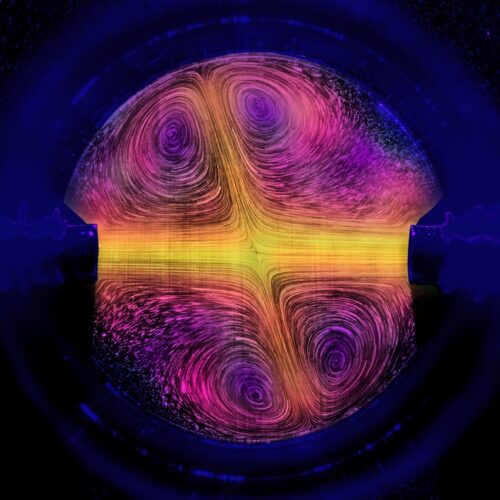
A recent study has applied the solution for Richard Feynman's reverse sprinkler puzzle to the mechanics of "silly sprinklers," which are designed to create unique water patterns. Researchers from New York University's Courant Institute conducted a series of experiments, confirming the 2024 "momentum flux theory." This theory describes how the angular momentum of water flows influences rotation.
The reverse sprinkler problem, though popularized by Feynman, traces its origins to Ernst Mach's 1883 textbook, *The Science of Mechanics*. The concept remained relatively obscure until physicists at Princeton University began debating the issue in the 1940s. Feynman, then a graduate student at Princeton, actively participated in these discussions, even devising an experiment in the cyclotron laboratory to test his own hypothesis.
Feynman highlighted the counter-intuitive nature of the problem in his 1985 book, *Surely You're Joking, Mr. Feynman*, noting, "The answer is perfectly clear at first sight... The trouble was, some guy would think it was perfectly clear [that the rotation would be] one way, and another guy would think it was perfectly clear the other way."
According to Ars Technica, these new findings help resolve a longstanding problem in fluid dynamics.


