G7 Nations Pledge to Reduce China's Dominance in Rare Earth Supply
The G7 nations have announced a commitment to cap any single country's supply of rare earth imports at 60% by 2030, aiming to reduce their dependence on China. This pledge was made during the Group of Seven summit in France. China currently accounts for nearly 70% of rare earth production and 95% of permanent magnet production, which are critical for military technology, electric vehicles, and wind turbines. Experts consider the target bold but necessary to address potential supply vulnerabilities, especially given China's past trade restrictions on these vital materials.
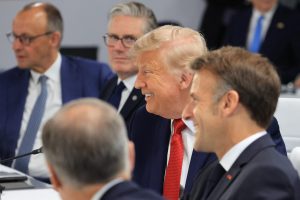
Seven of the world's largest economies, including the U.S., U.K., Canada, France, Germany, Japan, and Italy, have collectively pledged to reduce their reliance on China for rare earth minerals. At the Group of Seven (G7) summit in France, the nations committed to ensuring that no single country supplies more than 60% of rare earth imports by 2030. Their stated goal is to reach 50% "as soon as possible." The joint statement highlights a strategic effort to decrease dependence on China for raw materials essential to military technology.
China currently holds significant control over the rare earth market, accounting for nearly 70% of global rare earth production and 95% of permanent magnet production. These permanent magnets are crucial components in drones, precision weapons, electric vehicles, and wind turbines, making them a point of national security concern and vital for energy transition goals.
Experts, such as Cirba Solutions CEO David Klanecky, described the 60% target as "bold" but emphasized the importance of setting such goals. The urgency of this initiative is underscored by China's history of trade restrictions on critical energy transition materials, including 16 such measures since 2020. The impending reinstatement of China's export controls on rare earths critical to defense systems on November 10 further highlights the G7's concerns.
A United Nations critical minerals trade report from June indicated that Japan, the EU, and the U.S. collectively import over half of global rare earth magnets, with China being the primary supplier. The report also identified China's dominance in rare earth refining as a "critical bottleneck" due to the energy and capital-intensive nature of the process.
Despite these challenges, opportunities for diversification exist. Some non-Chinese rare earth refiners, particularly in the United States, are focusing on the G7's magnet requirements. USA Rare Earth, for instance, is working to establish a "mine to magnet" supply chain within the U.S., supported by $277 million in federal incentives from the CHIPS and Science Act to boost production capabilities.
According to Fortune, an International Energy Agency report from 2026 suggested that full implementation of China's export controls could jeopardize up to $6.5 trillion of economic activity outside China annually. Meredith Schwartz, an associate fellow for the Critical Minerals Security Program at the Center for Strategic and International Studies, warned of the risks of continued dependence on Chinese imports for military technologies, allowing China to use this "economic chokepoint."