
MIT's Initiative for New Manufacturing Marks First Anniversary with Strong Momentum
MIT's Initiative for New Manufacturing (INM) celebrated its first anniversary with a four-day MIT Manufacturing Week in May, attracting over 800 registrants from academia, industry, and government. The event showcased progress in accelerating new manufacturing technologies and addressing workforce needs. Key activities included a cybersecurity workshop, an AI in manufacturing symposium, and a regional research showcase. INM also expanded its industry partnerships and fostered innovation through a research showcase, where students and postdocs from across New England competed for prize funding. This initiative aims to inspire a new generation of manufacturing startups and move early-stage ideas from labs to real-world applications.
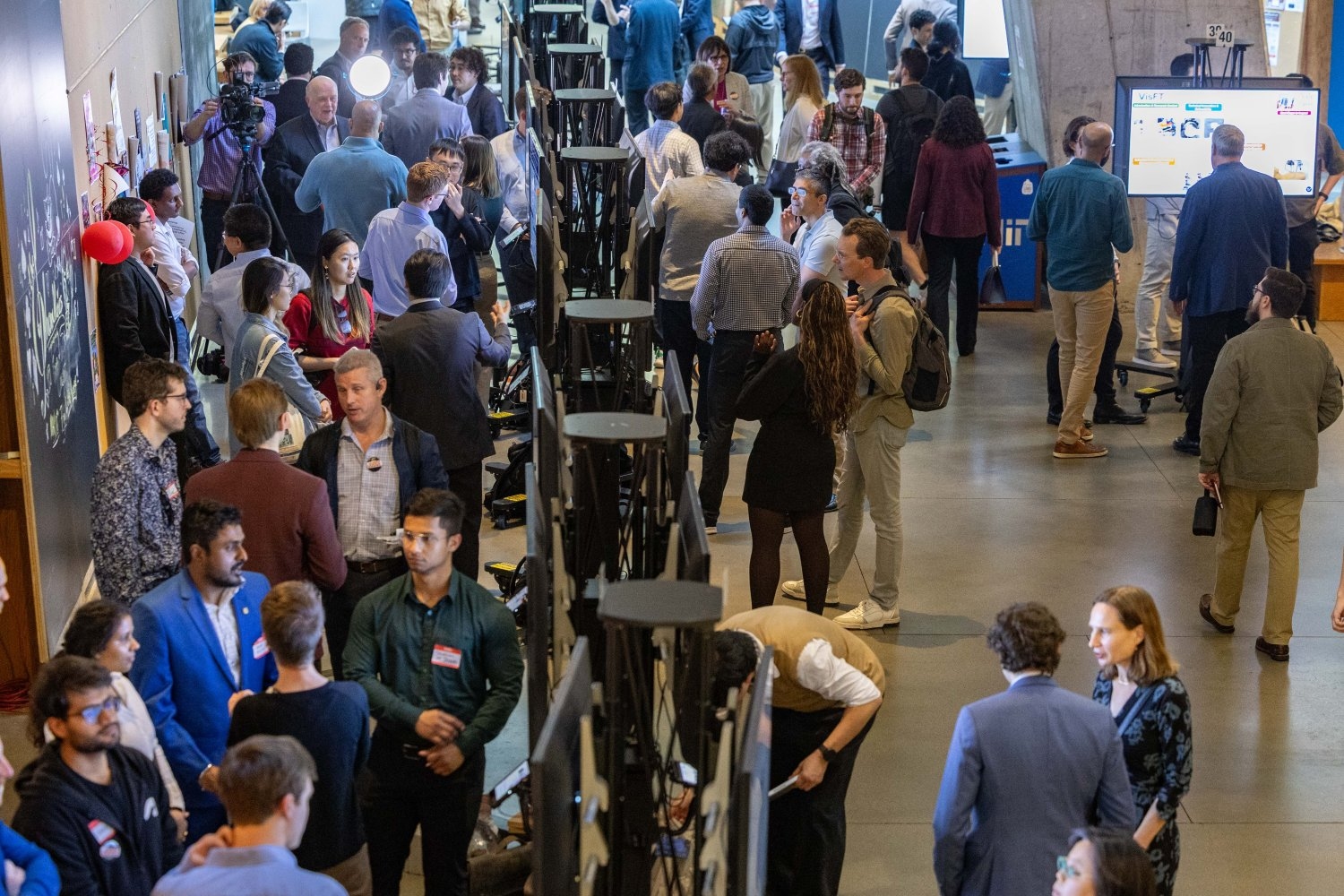
The Massachusetts Institute of Technology's (MIT) Initiative for New Manufacturing (INM) recently celebrated its first anniversary, marked by MIT Manufacturing Week in May. This four-day series of events drew over 800 registrants, including students, faculty, industry leaders, investors, entrepreneurs, and government officials.
Participants explored a range of topics, from the application of artificial intelligence (AI) on factory floors to the role of startups in driving innovation and new workforce solutions to address labor shortages. Paula T. Hammond, dean of MIT’s School of Engineering and co-chair of INM’s Steering Committee, noted the significant response and participation, highlighting the urgent desire for change across all levels.
MIT Manufacturing Week commenced with a cybersecurity workshop co-led by INM and Google Cloud for the initiative's industry members. It continued with the MIT MIMO (Machine Intelligence for Manufacturing Operations) symposium, which focused on deploying AI in manufacturing environments. Discussions also covered workforce development, emerging technologies, startups, and industrial transformation. The week concluded with a regional research showcase and competition involving more than 140 graduate students and postdocs from New England.
Throughout its first year, INM maintained a distinguished speaker series, featuring manufacturing leaders such as Keith Flynn of Anduril, Roland Busch of Siemens, and Venky Alagirisamy of Nike.
A central goal of INM is to position manufacturing as a frontier for scientific discovery, technological innovation, entrepreneurship, and societal impact. To support this, INM partnered with NSF I-Corps New England to host its inaugural manufacturing research showcase. Over 140 teams from 17 New England universities applied, with 40 finalist teams receiving mentorship. Eight teams ultimately shared $50,000 in prize funding. Jake Read, an MIT PhD student, won the top prize for "most transformative innovation" for "The End of G Code," focusing on modular machine control architectures. Vatsal Patel from MIT and Joshua Grace from Yale University won the research excellence category for "VisFT," scalable six-axis force-torque sensors.
Project themes presented by participating teams included AI tools for manufacturing, semiconductor manufacturing, robotics, digital twins, new materials, additive manufacturing, next-generation shipbuilding, and biomanufacturing. John Hart, INM faculty co-director and head of MIT’s Department of Mechanical Engineering, emphasized the transformative role of entrepreneurship in bringing research to market and accelerating innovation. The Cheng Wu Foundation provided support for the showcase.
During MIT Manufacturing Week, First Solar became INM’s eighth industry member. According to MIT News AI, other industry members include Amgen and Auto.


