
Most US Families Now Feature Two Full-Time Working Parents
For the first time on record, over half of parents in different-sex couples with minor children both worked full-time last year, according to a new Pew Research Center analysis. This trend marks a significant shift, with 52% of such families now having two full-time working parents, an increase of 21 percentage points since 1975. The analysis, based on U.S. Census data, highlights changing family work dynamics influenced by factors such as education and ethnicity.
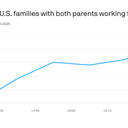
A recent analysis by the Pew Research Center indicates that a majority of different-sex couples with minor children now have both parents working full-time. This milestone, reported last year, shows 52% of these families falling into this category, representing a six-percentage-point rise over the past decade and a 21-point increase since 1975. This marks a record high for this family work arrangement.
The study also noted a decline in the share of families where only the father works full-time and the mother is not employed, falling from 42% in 1975 to just 23% last year. The analysis specifically focused on different-sex couples due to sample size limitations for same-sex couples.
Family work arrangements demonstrate variations based on race and ethnicity. The proportion of white and Asian mothers in families with two full-time working parents has increased throughout the 2000s, reaching 54% and 52% respectively. While most Black mothers (60%) work full-time alongside their male partners, this figure was slightly higher in 2000 at 64%. For Hispanic mothers, the family work dynamic has remained relatively stable since 2000, with 32% not working while their partner works full-time.
Educational attainment also plays a significant role in these dynamics. Nearly 70% (69%) of mothers with postgraduate degrees who are married to or living with their partners are in families where both parents work full-time, an increase from 59% in 2000. A smaller majority (56%) of mothers with bachelor's degrees share this arrangement, up from 50% at the turn of the century. However, this is true for less than half (43%) of mothers with some college experience or less.
Separate Pew research from March indicates that couples' sentiments vary based on their work arrangements. Over 80% of working parents in dual full-time income families reported that their arrangement provides a financial boost. In contrast, families where the mother is not employed largely believe that dynamic benefits their children's well-being. (Source: Axios)

