Pakistan Approves Rs3 Trillion Defence Budget for FY 2026-27 Amid Security Concerns
Pakistan's federal government has proposed a defence allocation of Rs3 trillion for the fiscal year 2026-27, representing a 17.65 percent increase over the previous year's original budget. This significant rise aims to maintain military preparedness against ongoing tensions with India, the evolving security situation along the Afghan border, and persistent domestic militant violence. The allocation will constitute approximately 2.08 percent of the country's projected GDP and nearly 16 percent of the total federal outlay. Key components include substantial increases for physical asset procurement and employee-related expenses, while military pensions are budgeted separately at Rs822 billion.
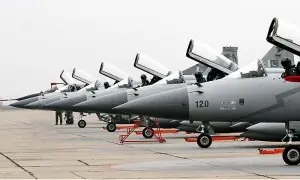
The federal government of Pakistan has proposed allocating Rs3 trillion for defence services in the fiscal year 2026-27. This figure marks a 17.65 percent increase compared to the outgoing year’s original allocation of Rs2.55 trillion. The decision to boost defence spending comes as the nation seeks to bolster its military preparedness amid continuing tensions with India, a deteriorating security situation along the Afghan border, and persistent militant violence domestically.
Finance Minister Muhammad Aurangzeb, while presenting the budget in the National Assembly, stated that Pakistan's armed forces have effectively responded to challenges, demonstrating competence and contributing to the country's global standing. The proposed allocation, following an over 20 percent increase in military spending the previous year, highlights the ongoing priority placed on defence and security within a challenging regional environment.
At Rs3 trillion, the defence allocation is projected to account for about 2.08 percent of Pakistan's estimated gross domestic product (GDP) of Rs143.6 trillion. It will also represent nearly 16 percent of the total federal outlay, which stands at Rs18.77 trillion, pushing military spending back above the 2 percent of GDP mark after several years below that level.
Budget documents detail the breakdown of the proposed allocation. Employee-related expenses, including salaries and allowances for military personnel and civilian employees, are set to increase by 14.36 percent to Rs967.55 billion, comprising 32.25 percent of the total defence budget. Operating expenses are projected to rise by 5.54 percent to Rs743.46 billion, covering day-to-day requirements.
The sharpest increase, 39.62 percent, is proposed under the physical assets category, which finances the procurement of arms, ammunition, and military equipment. This allocation will reach Rs925.83 billion, making up almost 31 percent of the defence budget and signaling a renewed emphasis on force modernization. Spending on civil works is also set to increase by 7.92 percent to Rs363.16 billion.
Separately, military pensions for retired personnel have been budgeted at Rs822 billion under the federal pension head. An additional Rs10.9 billion has been allocated for defence administration. The published budget, however, does not disclose expenditure on Pakistan's nuclear weapons program, which is believed to be financed through separate classified allocations.
The increase in defence spending occurs despite ongoing fiscal pressures, with inflation averaging 7.5 percent in the outgoing fiscal year and projected at 8.2 percent for 2026-27. In comparison, Rs1 trillion has been allocated for development projects, including Rs25.1 billion for healthcare and Rs46 billion for higher education.
According to Dawn Pakistan, this allocation reflects a government decision to prioritize security imperatives amidst economic constraints and calls for greater spending on development and social sectors.