
White House Export Controls on Anthropic AI Model Alarm Industry
The White House has restricted access to Anthropic's latest AI model using export controls, a move that could impact the U.S. artificial intelligence industry's long-term financial prospects. Experts suggest these government restrictions may limit the global adoption and growth of advanced AI models from firms like Anthropic and OpenAI, whose valuations depend on widespread use. This action raises concerns among businesses about future AI access and could influence investment strategies, potentially leading companies to diversify their AI tool providers.
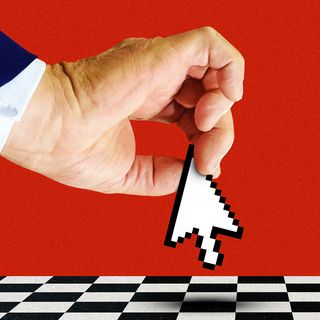
The White House has implemented export controls to restrict access to Anthropic's most recent AI model. This action is seen as potentially detrimental to the long-term financial prospects of the broader U.S. artificial intelligence industry. The valuations of major AI firms such as Anthropic and OpenAI are largely dependent on the global adoption of their advanced models, and these new government restrictions could limit their growth.
Jim Reid, global head of macro at Deutsche Bank, noted in a research document that this development is "not great news for U.S. tech firms or for those assuming breakneck speed of AI adoption." Hundreds of billions of dollars are currently being invested by data center hyperscalers and AI laboratories, with expectations of profiting from superior models. These financial calculations, however, rely on uninterrupted access to the technology.
Businesses that utilize AI models require assurances of continuous access, as reliance on a system that could be suddenly unavailable is impractical. Martin Chorzempa, a senior fellow at the Peterson Institute specializing in technology and national security, stated that this precedent suggests future AI models from companies like OpenAI and Google could also be perceived as having significant security risks.
Companies are already hesitant to commit to long-term contracts with major AI labs due to the rapid evolution of the market and the emergence of competing models. The added risk of "potential regulation" now provides another reason for firms to diversify their AI tool providers. Such a trend could cap revenue growth for AI labs like OpenAI and Anthropic, particularly as both are anticipated to go public later this year.
Anthropic's models, which are now subject to restrictions, were costly to operate. AI laboratories commonly subsidize the initial running costs of their most powerful models. For example, Anthropic had offered these models to paid subscribers for a two-week period before planning to introduce additional usage fees. The government's intervention effectively shortened the subsidy window for Anthropic's most expensive model.
Export controls, while powerful leverage, carry the significant risk of encouraging the development of alternative suppliers. Chorzempa highlighted that such controls inherently foster the creation of competing solutions, citing China's past use of rare earth export restrictions, which prompted other nations to seek their own mining capabilities. Even before this action against Anthropic, concerns, particularly in Europe, existed regarding the U.S. government using AI tool access as a geopolitical leverage point. The current move could provide momentum to Chinese open-source AI models, as the uncertainty of future access to U.S. models provides a distinct advantage to open alternatives.
According to Axios, these developments underscore a critical juncture for the global AI landscape and U.S. technology firms.


