Goldman Sachs Identifies 'Postmodern' Investment Era Driven by Capital Spending Surge
Goldman Sachs' global strategy team, led by Peter Oppenheimer, suggests the world has entered a "postmodern" investment era, breaking a four-decade-long financial formula. This new cycle is predicted to redefine asset classes and sectors, moving away from cheap capital and towards rising real interest rates, geopolitical fragmentation, and a significant surge in capital expenditure. This follows historical patterns where corporate resources were directed towards offshoring and then share buybacks.
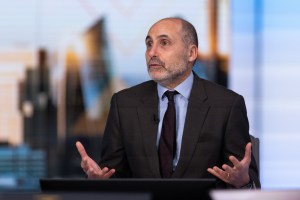
Goldman Sachs' global strategy team has identified a new "postmodern" era of finance, signaling an end to investment principles that guided the market for the past four decades. According to Peter Oppenheimer, the firm's chief global equity strategist, this new era will be defined by rising real interest rates, geopolitical fragmentation, and a significant surge in capital spending, a phenomenon not observed since the post-war period. This analysis was presented in their recent research paper, "Global Strategy Paper No. 76: The Post Modern Cycle, Navigating the Capex Boom."
The preceding "Modern Cycle," spanning roughly from 1982 until the pandemic, was characterized by strategies focused on low labor costs, inexpensive borrowing, and returning cash to shareholders. This period saw corporate profit margins reach record highs and substantial investor wealth accumulation. Prior to this, the "Traditional Cycle" before 1980 was marked by volatility, inflation, and investor demands for high dividend yields.
During the "Modern Cycle," particularly between 1990 and 2009, labor's share of national income declined in 26 out of 30 advanced economies, with the median falling from 66.1% to 61.7%. This trend was influenced by globalization, as manufacturing jobs moved to lower-cost regions, leading to stagnant wages in Western economies while profit margins soared.
Following the 2008 Global Financial Crisis, a new pattern emerged. Despite a weak economic recovery, equity markets experienced one of their strongest recoveries on record, largely disconnected from underlying economic growth. Companies, with interest rates near zero, often chose to return capital to shareholders through stock repurchases rather than investing in new factories or hiring. The S&P 500 notably rose more than 400% between March 2009 and 2022, while inflation-adjusted wages showed little movement.
The "postmodern" era, as outlined by Goldman Sachs strategists, is expected to reshape equity returns and challenge long-held assumptions in modern portfolio theory due to the projected capital expenditure boom.
(Source: Fortune)