Pakistan to Transform Government Monitoring with Real-Time Digital Oversight
Prime Minister Shehbaz Sharif has decided to implement a real-time digital oversight mechanism to enhance government monitoring, service delivery, and public perception. This initiative, part of the Digital Nation Pakistan Initiative, involves the Prime Minister’s Office System (PMOS), an AI-powered platform developed by the Pakistan Digital Authority (PDA). The PMOS aims to connect all federal ministries with the Prime Minister's Office, enabling instant communication of directives and real-time tracking of tasks and projects. Economic Affairs Minister Ahad Cheema chaired a review meeting, highlighting the system's potential for improving transparency, accountability, and efficiency in government operations.
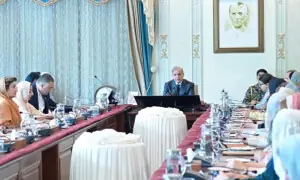
Prime Minister Shehbaz Sharif has announced a plan to transform the government's monitoring mechanism through real-time digital oversight. The initiative, designed to improve service delivery and public perception, is part of the Digital Nation Pakistan Initiative, with its monitoring model finalized by the Pakistan Digital Authority (PDA).
The Prime Minister's Office System (PMOS) is an innovative AI-powered platform central to this transformation. It aims to strengthen governance, enhance coordination, and improve the monitoring of government initiatives across various ministries and departments.
A review session was recently chaired by Economic Affairs Minister Ahad Cheema. Attendees included Information Technology Minister Shaza Fatima Khawaja, Secretary IT Zarrar Hasham Khan, Chairman PDA Sohail Munir, and senior officers from the Prime Minister’s Office and relevant ministries. During the meeting, officials from the PDA demonstrated the PMOS.
The system is designed to connect all federal ministries with the Prime Minister’s Office through a centralized digital platform. Its features include real-time monitoring of tasks, projects, and milestones, which is expected to enhance transparency, accountability, and efficiency in government operations. Directives from the PMO will be instantly communicated to relevant ministries and departments, facilitating immediate progress tracking and performance monitoring.
PMOS also incorporates an automated alert mechanism that highlights overdue tasks through pop-up notifications for federal secretaries and other concerned officials, aiming to improve the timely execution of government directives. Additionally, a sovereign AI-based GPT-powered research system, also developed by the PDA, was presented. This tool is intended to support internal research by utilizing previous directives and official orders, providing faster access to institutional knowledge and aiding informed decision-making. It will also function as a virtual assistant for government officers, understanding official procedures and workflows to assist in completing tasks.
Minister Cheema lauded the PDA's efforts in developing the AI-powered PMOS, recognizing its potential to modernize public sector governance. He directed stakeholders to further refine the system before its broader implementation to ensure maximum effectiveness, user-friendliness, and operational efficiency. The minister stated that Pakistan is progressing towards an AI-based digital governance system aimed at improving efficiency, transparency, and public service delivery. He emphasized that PMOS would be a key facilitator for the National Digital Masterplan by strengthening inter-ministerial coordination and digital integration. Cheema also noted that citizen-focused digital services, such as Asaan Khidmat Markaz, are part of the government's broader reform agenda, which includes expanding initiatives like digital tax enforcement systems.
According to Dawn Pakistan, the meeting concluded with a commitment to leverage digital technologies and artificial intelligence to strengthen governance, improve service delivery, and promote a more responsive and accountable government framework.