Rare Daytime Lunar Occultation of Venus Visible June 17
A rare astronomical event, a lunar occultation, will see Venus disappear behind the Moon in broad daylight on Wednesday, June 17. Skywatchers in about 48 U.S. states, parts of Canada, and northeastern South America will be able to witness this phenomenon. The event, lasting approximately an hour, marks the first time in 11 years this type of occultation has been visible in the U.S. during daytime.
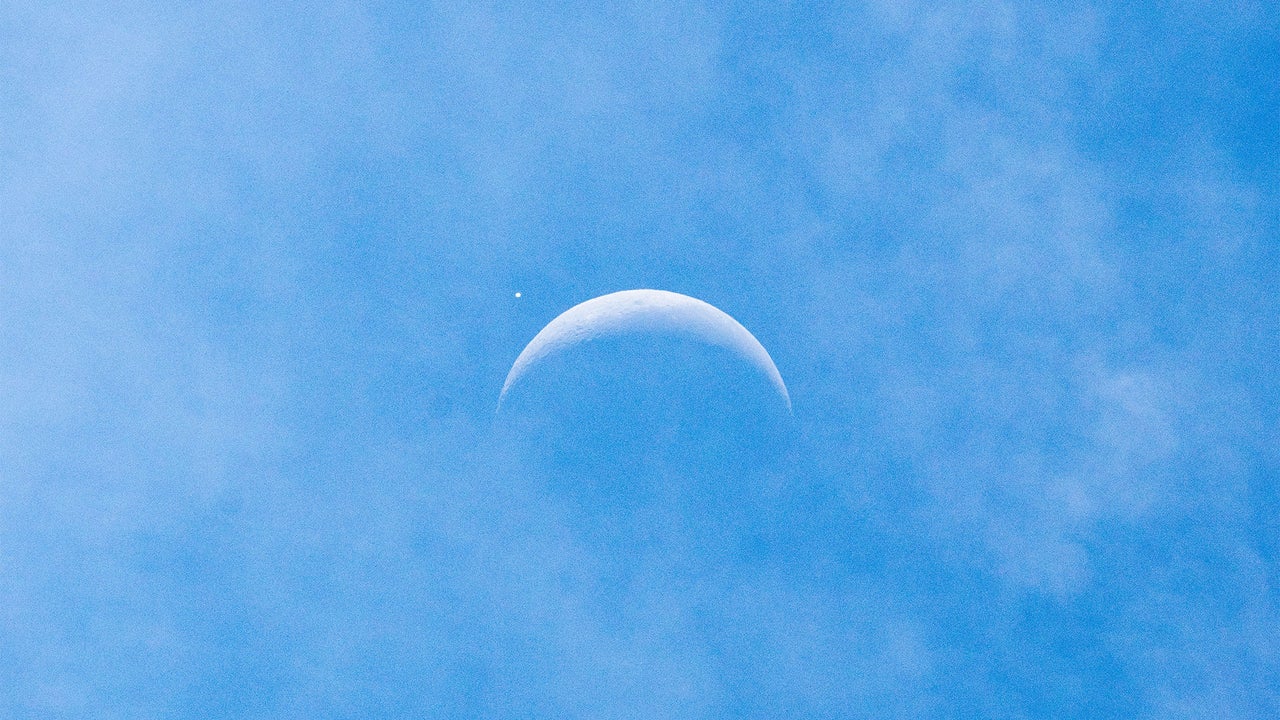
Venus, the brightest planet in our solar system, is set to briefly vanish behind the Moon on Wednesday, June 17, in a rare daytime astronomical event known as a lunar occultation.
This phenomenon will be visible to skywatchers across approximately 48 U.S. states, as well as regions of Canada and northeastern South America, including Brazil and Venezuela. The event is expected to last for about an hour.
A lunar occultation occurs when a planet disappears behind the Moon's edge before reappearing a short time later. This particular event is notably rare, being the first time in 11 years that such a lunar occultation has been observable in the U.S. in broad daylight, as most celestial events typically require dark skies for optimal viewing.
The Moon will be zero days past a full moon and at 11% illumination during the event. Timing for the occultation varies by location, with an estimated start time of 11:40 a.m. Pacific Time and around 4 p.m. Eastern Time. The visibility across the contiguous U.S. will span from 18:33 through 21:26 Coordinated Universal Time. Those outside the primary viewing region may still observe Venus appearing closer to the Moon than usual.
To view the event, binoculars are recommended. Experts advise looking for shaded areas, such as beneath a building or a tree, to avoid pointing binoculars directly at the sun, which can cause severe eye damage. Viewers should aim just to the left of the crescent moon to locate Venus. For those without binoculars, a phone camera zoomed in and pointed in the correct direction may also capture the event.
The International Occultation Timing Association (IOTA) has provided a guide, including a visibility map and city-by-city timing estimates for Venus's disappearance and reappearance. These times are given in Universal Time (UT), requiring viewers to adjust for their local time zone.
According to Fast Company, this rare event offers a unique opportunity for daytime skywatching.