Trump's Interim Iran Deal Divides MAGA Allies
President Trump's interim deal with Iran has generated significant opposition among his hawkish, pro-Israel allies, who view the U.S. concessions as a betrayal. Critics are demanding transparency regarding the Memorandum of Understanding (MOU), which has not been released to Congress or Israel, and express concern over the potential for Iran to sell oil, receive sanctions relief, and access a $300 billion reconstruction fund. The White House defends the agreement as a performance-based MOU that follows military action and advances U.S. interests, while Vice President Vance, a key negotiator, is slated to sign the deal.

President Trump's interim agreement with Iran has created a substantial divide among his conservative, pro-Israel allies. This group views the U.S. concessions within the deal as an existential betrayal of Israel and a departure from the "America First" principles.
Key among the critics' concerns is the secrecy surrounding the Memorandum of Understanding (MOU) with Iran. Pro-Israel conservatives are demanding to see the text, citing frustration with both its substance and the lack of transparency. White House officials provided conflicting timelines for the MOU's release, with some suggesting Tuesday or Wednesday, while President Trump indicated it might be released Friday following a formal signing ceremony in Geneva. Congressional Republican leadership and Israel, despite being a party to the ceasefire, have reportedly not seen the official MOU.
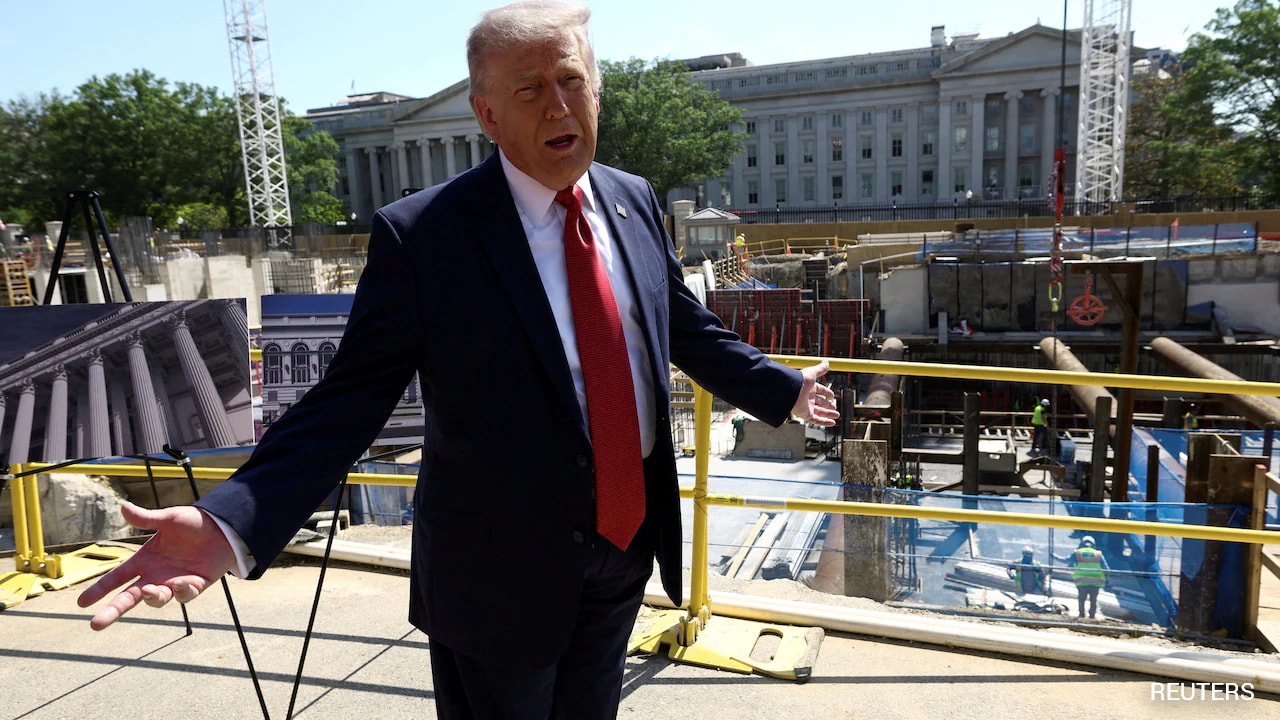
Adding to the backlash, President Trump praised Iran's negotiators during a bilateral meeting with Qatar's emir, a mediator distrusted by many pro-Israel Republicans. Trump described Iranian officials as "very rational people," "nice to deal with," "not radicalized," and "looking to help their country." Hawks, who consider Iran's government a terrorist regime incapable of reform, expressed concern that such language validates Tehran.
The objections from Trump's pro-Israel allies center on three main points. Financially, they are concerned that the MOU would allow Iran to immediately sell oil and potentially open the door to sanctions relief, access to frozen funds, and a $300 billion reconstruction fund during future nuclear talks. U.S. officials maintain that any financial relief would be tied to compliance. Regarding leverage, critics argue that the agreement, by lifting a naval blockade and entering a 60-day negotiation window, trades away the military advantage gained from operations that reportedly crippled Iran's nuclear infrastructure and conventional defenses. Lastly, there is a lack of trust, with critics questioning Iran's willingness to moderate. CIA Director John Ratcliffe reportedly warned Trump of U.S. intelligence doubts regarding Tehran's commitment to nuclear concessions for a final deal.
Several conservative commentators have voiced strong opposition. Fox News contributor Marc Thiessen called the prospect of $300 billion for Iran "a disaster." Fox News host Mark Levin also expressed significant doubts, while conservative commentator Ben Shapiro stated that many who supported Trump's actions in Iran would be "extraordinarily disappointed" if a bad deal was signed. Senator Lindsey Graham (R-S.C.) has called on Vice President Vance, identified as an "architect of the deal," to defend it before Congress.
The White House has defended the agreement. Spokeswoman Olivia Wales stated that the deal, following the "historic destruction of Iran's military capabilities through the successful Operation Epic Fury," is an "excellent, performance-based MOU." She added that it advances U.S. interests by ending conflict, reopening the Strait of Hormuz to reduce energy prices, and committing Iran to abandon nuclear ambitions. A senior U.S. official affirmed that President Trump is the final decision-maker and prioritizes the American people.
Vice President Vance, who helped negotiate the MOU and is expected to sign it, has dismissed hawkish critics as desiring "an endless conflict." His role in the deal potentially exposes him to political fallout from both isolationists alienated by the war and hawks angered by the agreement.
(Source: Axios)