
U.S. Military Conducts 10th Consecutive Night of Airstrikes on Iran Amid Escalating Tensions
The United States military has carried out its tenth consecutive night of airstrikes against Iran, aiming to reopen the Strait of Hormuz and degrade Iranian military capabilities. These strikes follow a series of attacks by Iran on U.S. allies and have intensified after the death of another American service member. Despite the escalation, glimmers of diplomatic hope have emerged as Iran's interior minister traveled to Pakistan for talks, while an interim deal signed last month has reportedly collapsed.
The United States military announced late Monday it conducted its tenth consecutive night of airstrikes on Iran. The operation aims to reopen the Strait of Hormuz and diminish Iranian military capabilities used to target commercial shipping in the vital strait.
These renewed bombings occurred after the death of another American service member and followed Iranian attacks on Kuwait, Jordan, and Bahrain, the latter being home to the U.S. Navy’s 5th Fleet. U.S. Central Command stated on social media that the latest strikes are "designed to further degrade Iranian military capabilities used to attack commercial shipping."
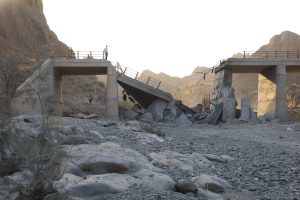
Targets reportedly included Iranian military command centers, air defense and coastal surveillance sites, maritime capabilities, missile and drone launch sites, and communications networks. Last week, U.S. forces also struck bridges and a tower at an Iranian port. Iran's state-run IRNA news agency reported at least one fatality near Tabriz and indicated other potential strike locations including Bandar Imam Khomeini, Sirik, Jask, Konarak, and Chahbahar.
Amid these escalating military actions, diplomatic efforts have shown a slight opening, with Iran's interior minister traveling to Pakistan, a designated key mediator in the conflict, for talks. This development comes as an interim deal signed last month, intended to halt the fighting, has crumbled.
The conflict has impacted global shipping, with activity through the Strait of Hormuz significantly stalled. Additionally, Iran-backed rebels in Yemen declared intentions to block Saudi Arabian shipping in the Red Sea, an alternative route for oil exports. This escalation has contributed to higher oil prices, with Brent crude trading above $88 a barrel and U.S. regular gasoline reaching an average of $4 a gallon.
The U.S. military previously identified two soldiers killed in Jordan, with a third missing, and confirmed another death in Iraq during a "controlled detonation" of a downed Iranian drone. President Donald Trump, in response, warned that Iran would "pay for that killing many times over!" and was scheduled to attend a ceremony for service members at Dover Air Force Base.
Separately, the British military's United Kingdom Maritime Trade Operations (UKMTO) reported a second ship attack in the Strait of Hormuz off the coast of the United Arab Emirates. Another vessel caught fire near Oman after being hit by a projectile, leading its crew to abandon it. Iran's Guard later claimed responsibility for targeting tankers in the strait. Kuwait and Jordan reported defending against incoming barrages, with Jordan confirming three Iranian missiles were shot down without casualties or material damage. Bahrain's Foreign Ministry condemned Iranian drone strikes targeting its country.
(Source: Fortune)


