
U.S. Space Force Triples National Security Launch Contract to $17 Billion
The U.S. Space Force has increased the maximum value of one of its National Security Space Launch (NSSL) Phase 3 contracts to $17 billion. This decision triples the contract's previous value of $5.6 billion, in response to the Pentagon's rising demand for military satellite launches. The NSSL program enables Space Systems Command to select launch providers for a range of missions, from experimental payloads to high-priority strategic assets.
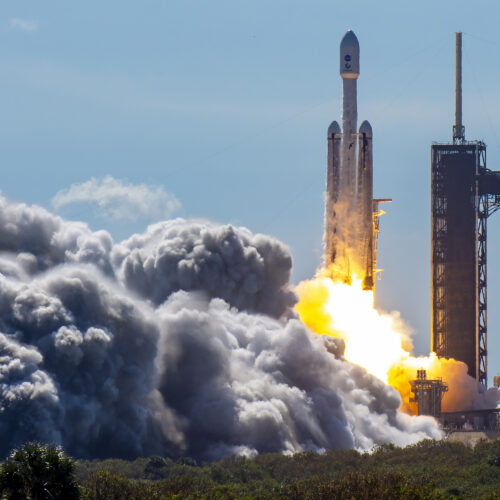
The U.S. Space Force announced a significant increase to the maximum value of one of its National Security Space Launch (NSSL) Phase 3 contracts. Military officials confirmed on Friday that the contract's value has been tripled to $17 billion.
This expansion follows a period where the previous $5.6 billion allocation was deemed insufficient. The Pentagon has indicated a growing demand for military satellite launches, necessitating the increased funding.
The NSSL program is structured to allow Space Systems Command, which manages the Space Force's launch operations, to procure launch services from various providers for individual missions. These missions are designed to deliver military satellites into orbit.
The NSSL program comprises two distinct categories. Lane 1 covers missions with a higher tolerance for risk, such as medium-lift launches carrying experimental payloads or rideshare missions for the Pentagon's surveillance and data relay satellite constellations. Lane 2 is dedicated to higher-priority strategic missions, including the deployment of the government's largest and most expensive spy satellites, as well as radiation-hardened communications satellites engineered for survival in a nuclear conflict.
According to Ars Technica, this move reflects the evolving requirements for space-based national security assets.


